
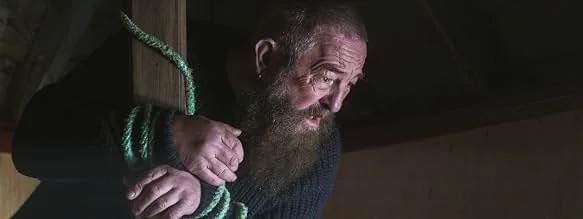
Acclaimed documentary director Justin Hardy continued the legacy of his father Robin with the continuation of a saga that began with the immortal folk horror classic THE WICKER MAN. When he discovered a script, notes and illustrations for a planned third entry in the trilogy, Justin decided to make WRATH OF THE GODS, the tale of a grieving widow, Christiane Schaldemose, and her daughter coming under threat from the community of a small Shetland island, led by Francis Magee and their Norse beliefs. Sadly, just weeks before the world premiere at this year's FrightFest, Justin died suddenly at the age of 61. Gore In The Store interviewed Justin’s longtime collaborators, and producers Alison Palmer and Chris Nunn, about the film’s origins, Justin’s sometimes complicated legacy and the challenges and rewards of realising Justin and Robin’s vision with the help of the Shetland community.
GORE IN THE STORE - Firstly, can I just say how sorry I am to hear of Justin’s passing. This must be a very trying time for you and his family.
ALISON PALMER - It's been a bit of an almighty shock. We're certainly reeling from it. You know, it's very difficult. It's very sad. Yeah, hard to come to terms with. I don't really think it’s sunk in at all really, to be honest.
So could you explain what Justin had discovered in his father's belongings that led to Wrath of the Gods.
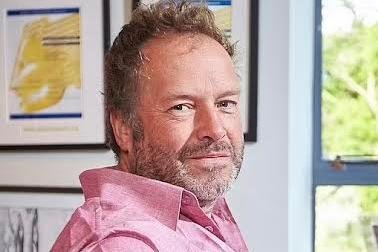
CHRIS NUNN - I worked with Justin and his half brother Dominic and produced a documentary called CHILDREN OF THE WICKER MAN, which premiered at FrightFest two years ago, and there's a book of the same name as well that was released last year. Part of that process was discovering six sacks of documents that had been in Robin Hardy's study around about the time he made THE WICKER MAN, and that sort of prompted an archival exploration. Justin was a historian and a historical drama documentary filmmaker who loved primary sources, and suddenly there we are getting to grips with the primary sources that tell you about your own parents, and the cult film that his dad had made. So we got into discussions about how Robin Hardy had quite publicly wanted to make a third part of the Wicker trilogy called WRATHE OF THE GODS. He had run a Kickstarter campaign. I believe the video for that campaign is still around, so you can actually see Robin talking about his film WRATH OF THE GODS. He'd written a full script, and he had done these beautiful storyboards. Robin Hardy was an incredibly talented artist, and he was actually taught to draw by Henry Matisse. So you know these absolutely stunning drawings, and I suppose Justin, Dominic and I had this discussion about whether or not one would want to explore making Robin Hardy's last film, which one outlet who was reporting on Justin's passing earlier this week, described as an act of mourning in and of itself, right? Going to go and complete your father's work. Robin Hardy's script was not great, and it revolved around the construction of a Viking theme park on the top of a volcano, which I believe during an orgasm, one of the gods kind of makes the volcano explode, and all these Disney-style executives who built the theme park die. I might not be doing it justice, or I might be doing it justice. We'll see, but I suppose Robin Hardy had this vision of going to Shetland and asking them if he could build a theme park over there to make his 500 million pound film, and me and Justin and Dominic thought that's not really what THE WICKER MAN was. That's not really what folk horror is. It's certainly not what it looks like today in 2026. So we took the two bits that we thought were really interesting, which was the Shetland Islands and Norse mythology, and we ran with an original concept from there.
AP - I think just going back to CHILDREN OF THE WICKER MAN briefly before we kind of moved to WRATH. I think working on that with Chris and the guys was fascinating in the sense that Chris and I were really witnessing Justin and Dominic having to come to terms with this very difficult family history and embedded trauma whilst making a documentary, and then in a way, the same thing has happened again with WRATH OF THE GODS with your filmmaking, but you’re filmmaking in and around trauma, really, in terms of those themes that started to be revealed from those sacks in Justin's attic. Then explored through documentary in terms of CHILDREN OF THE WICKER MAN, but they then continued into the narrative, some of the baseline narrative forming forming the script for WRATH OF THE GODS. So it's been a fascinating, heartfelt journey, and I think you know both Justin and Dominic have been incredibly courageous and brave to have even started that journey. To be honest, a lot of people would just go, no, that's too difficult. I'm not doing that. I'm not looking at that, and then block it all. So I think as producers, we've got a lot of respect for both of them to have even ventured on that journey. It's not easy to do.
What do you think that it was that drove Justin to honor his father's legacy in this way?
AP - I think you know it's well documented that Justin would say THE WICKER MAN is the film that fucked up his family. Literally, he used those words. So my interpretation of your question is, I think you know he was on a bit of a quest to try to settle some of that in terms of kind of some of that inward turmoil, but he is a documentarian. He is a historian, and therefore he was also fascinated in that whole film, you know, really in terms of where then could he take that? Where then could he kind of develop themes and narratives and stories and concepts, visions to to move the story forward and open up new conversations? So I think a mix of all of that intrigued him, and it felt a bit like he had to make this film, it wasn't really a choice. It was, I have to make this film.
CN - I think the only thing I'd add to that is that in the process of making CHILDREN OF THE WICKER MAN, and again, I think it's been documented in a few interviews, we did see Justin going at the end realising he sort of avoided THE WICKER MAN as a film because he knew there was all this shit in the background. But going through the process of making the documentary, he did come to a place with his dad where he said, "Actually, I'm quite proud to have had a radical for a dad.” You know that wasn't easy. No one should go into that, pretending that means everything was okay. It doesn't. But wow, that's a lot of radicalism at play. And I think he gained a new understanding of his dad in that light. And if his dad had just pointed in this direction, and said, "I think a final film over there would be quite interesting,” wouldn't it be cool to go and say, 'All right, Dad, you've been radical before. I wonder if I can go and and and put some of my radicalism and put some of that to the test,” through Justin's own fabulous career as a filmmaker.
AP - Chris, I've got a side question, the other thing that that came from CHILDREN OF THE WICKER MAN, which was wonderful, is that the actual documentation, which again has been talked about in previous articles, raised up the the understanding and realization that actually Justin's mother Caroline Hardy had been an unrecognized executive producer of THE WICKER MAN. It wouldn't have happened without her. She bankrolled the whole thing, and it was a lot of money back then. So, Chris, I also wonder: Do you think sort of some of the drive and some of the desire and some of the passion and conviction of wanting to go and to do WRATH OF THE GODS was also actually about his mother and wanting to honor that legacy moving forwards, and not just the whole massive connection with the father.
CN - She did, and our film is dedicated to Caroline. I think that's absolutely there. It was not just having a radical dad, but having a mum who backed the radical dad, financially and said, “actually, you might be a little bit of a shit husband, but I really admire your creativity, so I'm going to help you as best I can.” So I think WRATH OF THE GODS is absolutely a nod to and an appreciation for Caroline as much as it is for Robin.
That's interesting that you brought her up because I was wanting to ask about themes and parallels in the trilogy. I thought that WRATH OF THE GODS had had a bit of a feminist edge, which you can see in THE WICKER MAN as well. And I was just wondering if there were any other themes and parallels that you saw between this film and the previous films as well.
CN - It's a really good question because I think that that was absolutely at the forefront of our minds. People are calling it the Wicker trilogy, which I really enjoy. But actually, we know narratively that's not true at all. There's no connection between the WICKER MAN and THE WICKER TREE, and subsequently, there's no connection to us either. We were very close to getting Lesley Mackie to appear, and that means she would have appeared as Daisy in THE WICKER MAN, as her character in the WICKER TREE, and would have appeared in our film as well. And that might have been a nice touch had we been able to pull that off. But thematically, I think we're still exploring small island communities. I think you know religion and themes of paganism and superstition loom large in our film as much as they did in THE WICKER MAN as well. I think our approach is not only a feminist one, but also possibly a post colonial one, which is to say that THE WICKER MAN, for all these free folk on this island, they're still lorded over by a lord, and I suppose what what we thought in going to Shetland and meeting people and working with a community, the film was very much developed largely by our Shetland cast as much as by any any of the rest of us. We consulted dialect experts. The script was rewritten a few times with those people kind of actively contributing, and so that looked to us like kind of grassroots filmmaking. Which for me, was also about folk horror and what you do with folk horror? Folk horror works best when it is rooted in place, and so we worked really hard. And Justin was super passionate with me and Alison as he was about rooting it in those islands, even though we have created a fictional island, much like THE WICKER MAN. But going there, being in the place, shooting entirely on location, was all part of I think giving that island community a proper visibility.
AP - I agree with all of that absolutely, and I think there was a definite intent in this particular film from Justin, in terms of really exploring those formidable female characters and voices and strength and ownership of belief to really come through this. And in some places, in quite challenging ways, quite radical, might we say? So yeah, I think it's an interesting progression, isn't it? In terms of this, this one definitely does have some more feminist twists and turns.
Do you think, just going back to Robin himself, did he have a bad run in with a Scotsman to kick all this off?
CN - I have absolutely no idea what took him. You know, because Ritual, the book which allegedly inspired the Wicker Man, that isn't set in Scotland from memory. And that was inspired by a real life murder that also happened in England. So I don't really know what the Scottish thing was, or why he went there again to Scotland forTHE WICKER TREE. I do think that with WRATH OF THE GODS, he had initially said Iceland, and then shifted to the Shetland Islands. So possibly because of budget.
AP - That old cracker.
Whereabouts in Shetland did you film, and how was that?
CN - We based ourselves in a part called Lower Voe, which was just outside of Brae, which is sort of the biggest town on the mainland at the top, so about a half hour drive up from Lerwick. We had considered going further. We had scouted Unst right at the top, which in its own way would have been incredible, and in another way would have been so difficult to have a sort of crew and cast multiple ferries away. So Lower Voe became our hub. There was an old pub that was not being used, so we based ourselves in the pub, and we built some sets internally there, and then we went off and did location shoots where appropriate. It was a wonderful experience being up there. The community up there is really really strong, and we'd obviously engaged lots of people, mainly our cast and some other people before we went there. But just getting stuff done, you know, on a super low budget film, it was great to have all these people around. “Oh God, we've got to shoot a boat scene!” and someone would go, "I've got a boat!”. So yeah, we were really grateful to have that community around us.
AP - It was wonderful. Lower Voe became home. That pub was fantastic, I love that pub. I mean, it hadn't been used for a good few years. We got hold of the local and said, "How about it? What do you think? You know, we're going to bring your pub back to life.” We had our DOP staying in an upturned boat, literally. I was in some tiny hut, Justin was in some small cottage and Chris was in a house with a whole family. The landscape obviously was an utter gift, and it's often said, isn't it? But you know, it becomes a character in itself, and it really did. And the sea was forever ominous and hovering and talking to us, and sort of yards away from where our main central hub was so it was quite an inspiring place to shoot. Fully immersive. A little bit difficult in the sense because everyone's quite a long way from home. It was 12 hours on the ferry and flights. You certainly did feel like you're in another world, and obviously intense, you know, filmmaking's intense as an experience. But the community really welcomed us in, and we couldn't have done it without everyone on Shetland. Everyone's been incredible, and it was a real collaboration. That's one of the real joys of it. It was really collaborative. We've loved that.
How important was it for you to keep the dialect and accent as it was in the film? Because you don't really sugarcoat it at all. As a Scot, it was quite refreshing to hear.
CN - it was absolutely essential. Justin had written a script that wasn't in dialect. I think the first and second drafts were not in dialect. Then, on one of our reccies, we met a dialect expert, and we also started working with people we were casting. And that's when a version turned up that had dialect in it, because we weren't obviously saying dialect in the singular. It's actually dialects, which is also incredible in its own right. But we had to be careful not to really want to give it a very specific sense of place because we were creating our own island. So essentially, we end up with a bit of a blend of Shetland dialects in this, but it was absolutely important. It was a discussion we had with our cast continually, and it's one where we feel really strongly that we have just put it out into the world, which I think is a big creative risk. If I'm honest, it's quite a radical choice. No subtitles, guys. You're just going to have to get your heads around this, and we hope you get your heads around it and enjoy it because it's a beautiful thing to hear, and I think it's it's it's very under showcased in film and television, despite including SHETLAND running for as long as they have at the BBC. I still just don't think it's as widely known, so I'm very proud that we were able to do that.
AP - It certainly gives a distinctive tone to the film.
CN - And we'll just have to brace ourselves, Alison, for all the Letterboxd reviews that say, "Well, I thought it was interesting, but I didn't understand half of it.”
AP - Sometimes you know you have to just make your decisions early on in terms of vision and concept and premise and tone, and then you have to really work hard and stick to that. Otherwise, you end up with a mushy mess. And that was certainly not what any of us were going to do, especially when Justin and Chris and I are also strong in our convictions. You know, if we say this is a route we're going down, then that's the route we're going to go down. So, it will be interesting to see what people make of it, what the world makes of it, but we're proud of it. We were warned against it. Lots of people said, "Don't do that! You know, that's just not going to go down well.” And we were like, "No, no, no. This is what we're doing. It's the authenticity of that. I think it is rich and really adds to the fabric of the whole film.
CN - I think as well, it's an attempt to say, what else can filmmaking be? I'm a university academic, so is Alison. Justin was lecturing at UCL. I think part of this for us is to say we can make films in other ways. They can be cheaper than you know the money that tends to fly around. They can take creative risks, and they really can involve communities in their production. I don't actually think anything we've done is so radical that you couldn't say to the BFI or Screen Scotland or some of these bigger agencies, "Hey guys, how about we spread this money around a little bit more, and how about we give some people more opportunities? I think that was a big drive for us, and therefore, not doing the dialect justice and putting that out into the world would have been a huge mistake, I believe.
AP - Yeah, detrimental. Yeah, we did quite a lot of upskilling as well. Although I don't really like that word, so let's just go back to the collaborative theme. We worked a lot with some brilliant, talented people on Shetland who wouldn't have had an opportunity to be part of a feature setup before. So it is a bit more than a film for us. It felt like more of a creative exchange, than just making a film of 90 minutes. If that makes sense.
And how do you feel about the film playing in FrightFest now?
AP - It’s brilliant. We’re really thrilled. Justin was utterly delighted. You know, FrightFest is one of the biggest, most prolific horror festivals in the world. So we're really thrilled to be part of that. It's a great showcase for the film, and I think obviously, none of us knew this was coming. In terms of the tragic loss of Justin, it feels like this is a really brilliant place to honor him and honor his work and legacy. We're proud to have the film showing at FrightFest. It's a great home and a great premiere for us. We're delighted.
CN - I also think because we premiered CHILDREN OF THE WICKER MAN at FrightFest two years ago on the Friday in the same slot on the same screen, it feels ridiculously appropriate to sort of be coming home.
AP - Absolutely. But, it's going to be very very hard to do this without him. Very hard
Iain MacLeod
WRATH OF THE GODS - WORLD PREMIERE
DISCOVERY SCREEN 1 - FRIDAY 28TH AUGUST, 8:30 PM