
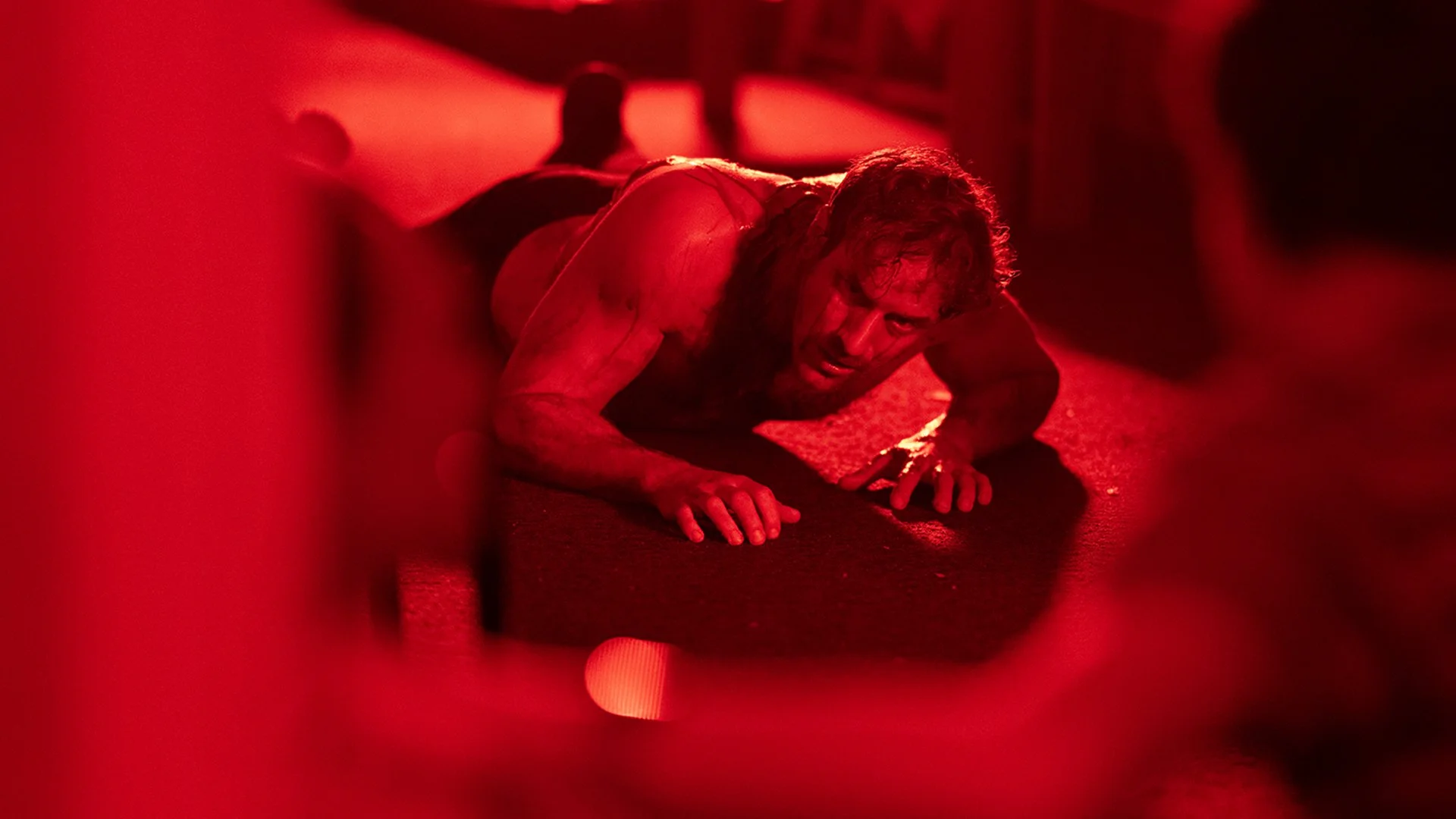
Closing this years Tubi Halloween FrightFest is the Australian werewolf/zombie mashup flick DEAD HOWLING, directed by John V. Soto. Telling the tale of two teenagers, Megan and Billy seeking sanctuary in the middle of a zombie pandemic, their journey is complicated when they are taken under the wing of Carter, a gruff survivalist who has a certain lycanthropic secret which might just carry their salvation. Gore In The Store chatted ahead of the films World Premiere with John to discuss why there are so few Australian werewolf movies, the problems that come with making such a film and the current boom in Australian genre filmmaking.
GORE IN THE STORE - How did this particular project come about for yourself?
JOHN V. SOTO - I was contacted by a producer called Tom Reeve, back in 2024. And he said he had a script involving zombies and werewolves, and would I take a look? So I read the script and I liked the overall concept and the story, and I said there were a few things that weren't quite right from a story perspective, that needed work. I basically said, look, I'm definitely interested in this and I'd like to work with the screenwriter James (Pickering) and do a couple of rewrites on the script. So we did a bit of rewriting, and obviously had to set it in Australia because his version was set in completely different locations, so I've set it in Australia. One of the big obstacles with this story, one of the big decisions was to go supernatural or not with the werewolf or the mythology? And I decided, well, the problem is if you go supernatural and you stick to the rules, werewolves only, sort of transform once a month on a full moon. So that creates a problem, particularly if you're being pursued by zombies, and you've got to hole up for like two weeks before you can transform into a werewolf, or the zombies are gone, or you're dead. So I thought we needed something in this world that he could change when he needed to, and that's where we went down the science route for this. I had an idea for combining werewolves and zombies about a decade ago but it wasn't fully formed, and I thought it wouldn’t work because you have that time issue. So I just didn't pursue it any further. But with this script, because there was a journey involved, we could make it work. And then I had to solve the issue of not using the supernatural aspect of it, making it science-based. So that's how we sort of got to that point. And then from there, what happened was Tom got in contact with Kaleidoscope to see if they'd be interested in handling or representing the film. We sent them a copy of the script. They came back with notes, which, you know, is the bane of the writer's life, but generally makes the script better and so we had some more work to do. But after a number of drafts, they were happy to back it. And that's how it all started.
It seems the film's been sold as one thing, but when you watch it, it's a zombie film, and then it's a werewolf film, and then it becomes a kind of survival drama. Which aspect did you feel the most affinity with?
JS - So, essentially, when you mix genres, you've got to try and balance it, so we can hopefully satisfy both fans of those two genres. And I know the werewolf guys are probably the most outspoken of the two. They're very passionate about their werewolves, so for me, I wanted to put more werewolves in it, but I needed to work out the story, the journey, and we also needed to build and spend time with the characters, and build those relationships. The backstory for Carter was really important for the film to have a lasting effect, it's got to have some sort of heart. You have to feel like you really care for the characters and just want to hang out with them. And I think we've achieved that. I think overall, it's pretty nicely balanced. Maybe if we are lucky and the film does well enough, we might be able to do a sequel and have more werewolves because we have got an idea for that, and more zombies and make it more action oriented. But I think this is really the ‘setting the scene’ version.
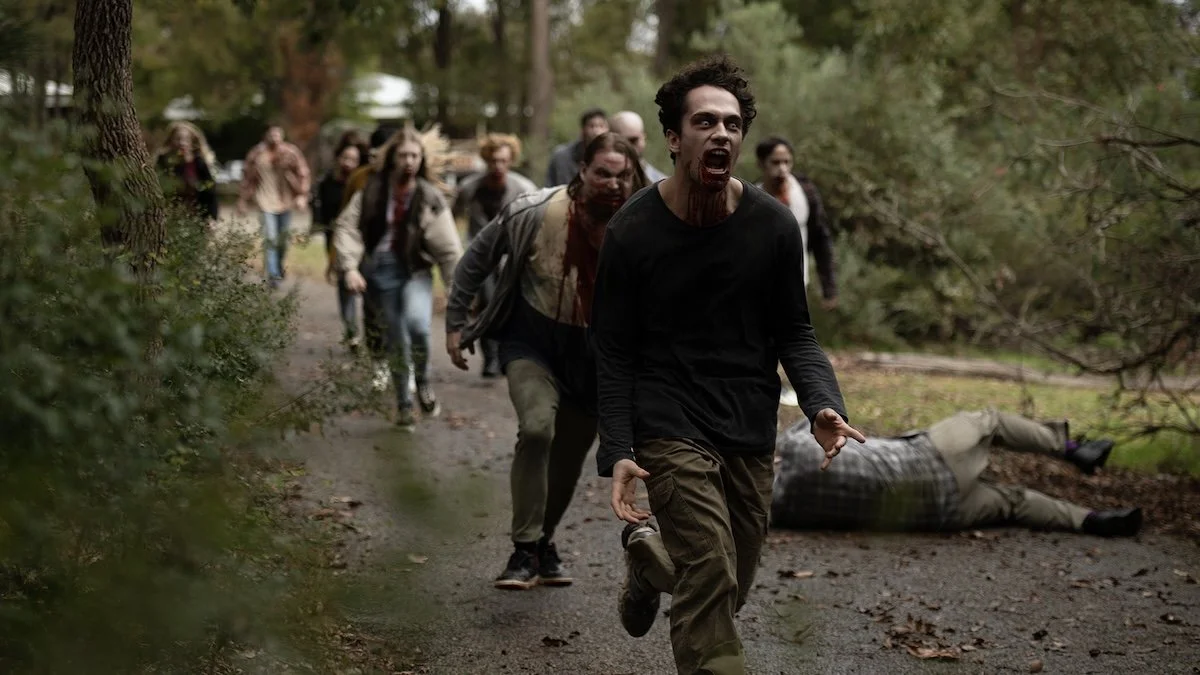
And how does it feel to be one of the first few Australian werewolf films since HOWLING III from 1987?
JS - Yeah, there you go. You are correct. Yep, HOWLING III was made in Australia, but that's you know an American film. This is like the first true blue Australian werewolf. And, you know what? I think this is the first of the two werewolf and zombie genres in the world. So it's a world first, and it's Australian. Yeah, feels good, and that's probably what attracted me to it. Actually, I asked a couple of my sons “Would you see a film about werewolves and zombies?” And straight away, “Oh yeah, definitely!” So for me I think it's something we've not seen before and it's kind of cool to have something fresh because there does seem to be a lot of repetition with stories and genres. And that's why I think films where they're mixing up the genres are more interesting because it's just fascinating to see them go against each other. I mean, obviously it's been done before in terms of werewolves and vampires with UNDERWORLD, but yeah, for me it was like this is cool, I’ve not seen this before. Let's give it a go.
Are there any particular challenges in making a werewolf film?
JS - Well, the biggest challenge is the werewolf itself. It's a huge challenge because,firstly, Europe has a history of werewolf movies, as does America, and whereas in Australia, apart from HOWLING III many many years ago in the 80s, no one's made any werewolf material, so the special effects houses here, that's not their thing. They're doing all sorts of other creatures, but werewolves are not one of them. So that the first thing was logistically, do we use visual effects? Do we have some guy in one of those green suits, walking around, and swap him out for the VFX thing, or do we go for practical? The VFX thing, honestly, you can spot it. I can spot when something is a pure visual effect. You can just tell. So we decided to go practical. But if we're going practical, then we've got to find a special effects house that can produce a werewolf, and it turned out there's a company called Sharp FX. There's a guy there called Russell Sharp, and this guy made a werewolf for fun. He actually designed a werewolf for a commercial. I also saw his other work, his creature work. He's worked on Hobbit movies. He's done all that sort of stuff, yeah, major productions. And I had a chat with him, and he said he can do it, and he actually delivered. He made a really amazing werewolf suit.
That is something I appreciated about your film. Like you said, you can spot a digital werewolf a mile away, and if you are making a werewolf film, you surely have to take the practical route.
JS - Yeah, exactly. And you want a good werewolf too. There was a recent American film, I won't say the name of it, but the werewolf did not look very good. It looked like it was practical, but it's a very plastic looking werewolf. So you've got to have a good werewolf, and you know Russell and his team, they took about four months. A team of three worked on it for four months to create that. And it’s animatronic too; the ears move, the eyes move, obviously the jaw moves up and down. It's a whole bunch of things that it does, and then of course that's got to fit over the stuntman who wore the werewolf outfit, so the whole process is massive. I had no idea it would be as extensive as that.
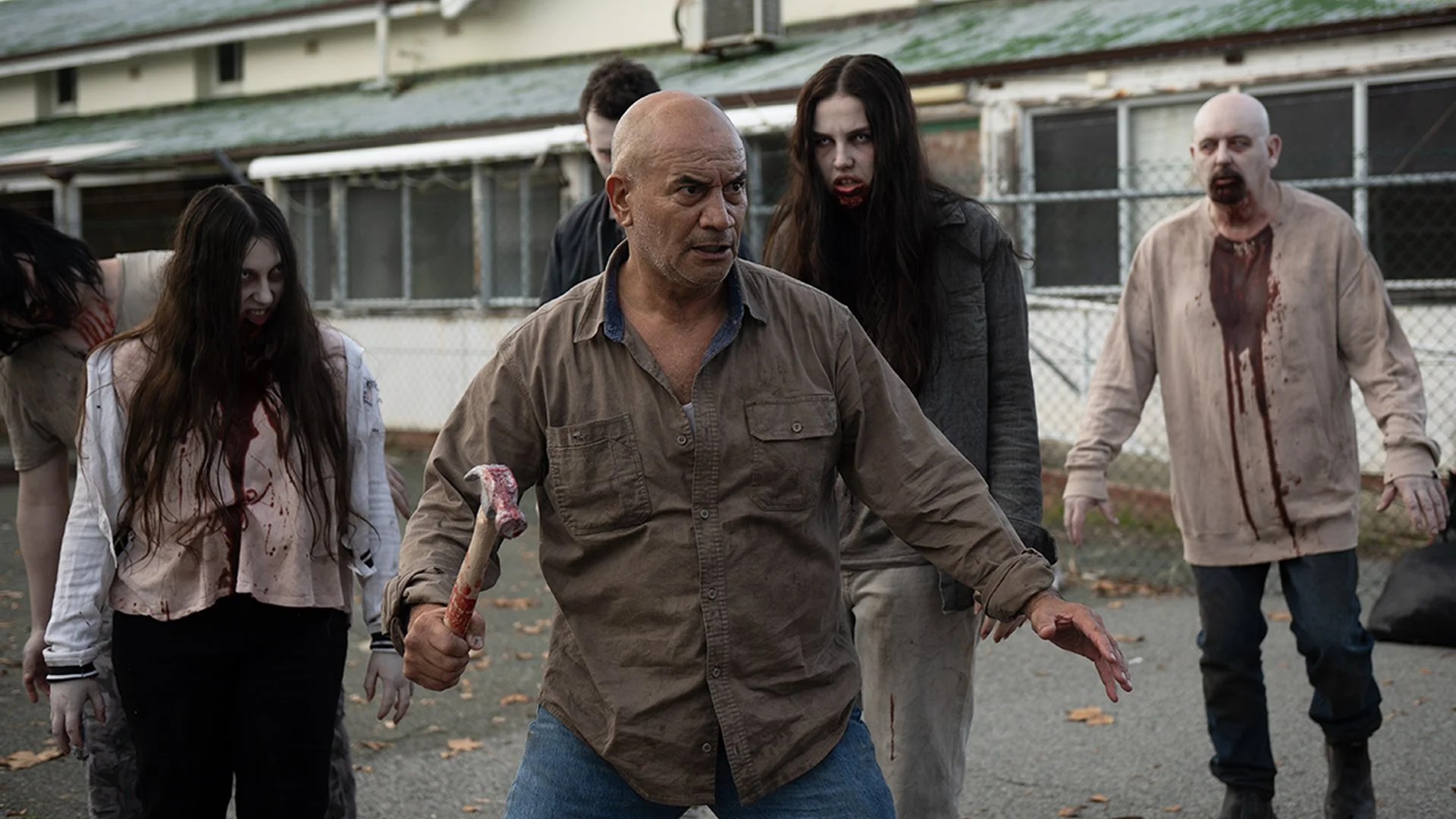
And in comparison to zombies…
JS - They're the easy ones, and now I get it. I get why people do zombie movies because it’s far easier to create a scary zombie than a scary werewolf.
I wanted to ask you, at FrightFest earlier this year, and just in general, there seems to be a boom in Australian genre filmmaking. Do you think that yourself, and how do you feel about that?
JS - I think it's great. I love genre films. I love horror films in particular. In fact, I started in horror with my first film, CRUSH, which was a supernatural thriller. Then I went full blown horror with NEEDLE, and then I sort of backed off and went into thrillers and a few other genres. But I’m back to my horror roots, as you might say. In Australia, we do have a reputation for making good scary movies, good horror films, and there has been a resurgence here. And I think the reason is our governments, particularly, both local and state and federal, are realizing due to the success of horror films internationally, in the last decade, that maybe they should be supporting these crazy horror films and not just focusing on dramas and stuff like that. They should sort of broaden the scope, and they have been. They have been supporting Australian genre filmmakers. It would be nice if they supported them more, but at this stage, all the state governments are very good with that. They will support horror films. I'm in West Australia, so Screenwest is our state body, and they've been great. They support horror films far more than probably any other state.
What for you was the most rewarding aspect in making this film?
JS - That's a tough one. Well, honestly, when we started in pre-production, I was thinking, are we going to be able to pull this off? Have I bitten off more than I can chew? Like you just say, oh, zombies and werewolves and when you watch the film, you think it looks effortless. But no, no, no! It's a massive amount of work. And I will say that up until the moment the werewolf arrived on set, which it didn't arrive until like week three, we had a four-week shoot, so it's a fast-paced, two-camera shoot. Up until that point, I wasn't sure what it would look like because I'd not seen it. We had sketches. I had created a sketch of how I'd like it to look, and when Russell started he sent some sketches back and adjusted it. So you had that on a sketch, but that might not be how it turns out. So I would say that was my biggest fear that it could go off the rails. You have a bad werewolf, it's game over, or you try and fix it in post, which you can't. But the most pleasing aspect was when the werewolf rocked up on set, and I'm like, "Yeah, that's going to work. We can do this now. This is certainly going to happen." And then also, I think the other pleasing aspect was all the actors and crew were so passionate about the movie. All of them were so excited to be on this film. I've not really had that before, so this one was just fabulous.
You mentioned earlier that you had to do a few drafts of the script. So did it go through a lot of changes from the first draft to your final one? And what was the hardest part for you to change?
JS - It did go through a lot of changes. James Pickering had done a good job. There's no question; he did a good job. It was solid, but there was no mythology. The werewolf was just there. There was no explanation where it came from. Nothing like that. And the backstory obviously needed to be built. So I had to build in the backstory, and it had to feel organic to the story. You just can't slap in someone to explain the character. The worst thing is to have him sit there explaining at the very end of the film, why he's doing what he's doing. So it had to be built in organically. So that was the most tricky bit. Also the structure of the story and where the characters, where they stop, because the idea was that Carter teaches the two kids lessons on how to survive the zombie apocalypse along the way. And also there's the reveal of Carter, and the mystery of Carter's wife. What happened to her? His family. So there's a lot going on. So there were a lot of things to fine tune all the way through? But, overall, I'm happy with what we've managed to pull off.
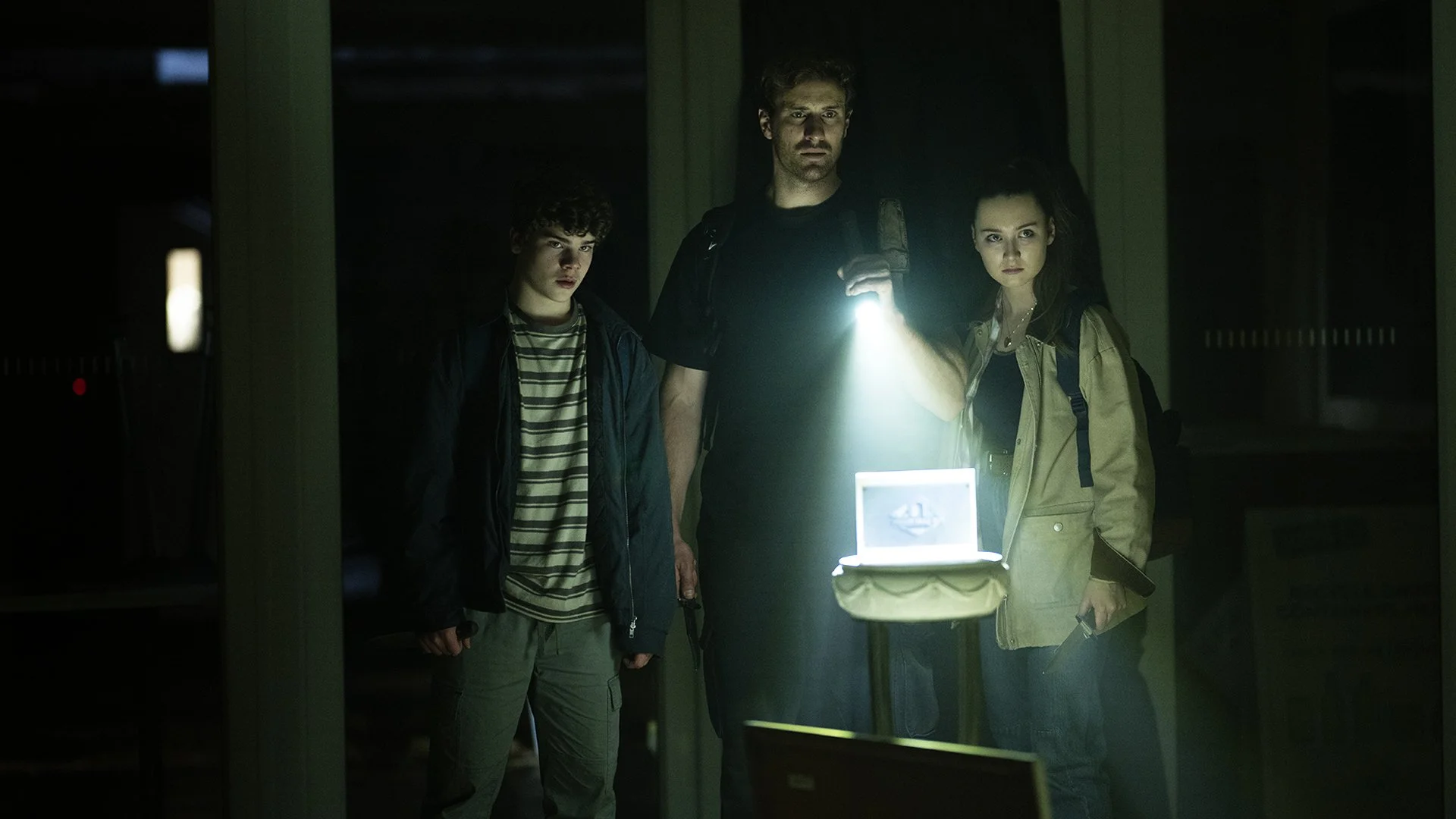
As the film moves towards the end, a theme of hope becomes more apparent. Is that something that you felt strongly about, especially with the way things are in the world today?
JS - Yeah, I wanted to sort of subtly put that in there. The world is a bit of a dumpster fire at the moment, particularly with all the wars and things that are going on. Just endless wars in the world. And I thought let's have something in there where people watch it. Maybe subconsciously they'll go, okay, well things aren't that bad. As long as there's hope, as long as there are good people in the world, we can get through our lives and look to the future. And that's the main thing. Even at the very end of the film, I can't give away too much, obviously, but even at the very end of the film, there's hope for the two kids in particular. There's hope there, and yeah, that was deliberately written into the script for that reason.
And, just one final question: Do you have a favourite werewolf yourself?
JS - To me, there are two types of werewolves. There's the werewolf where you've got the real werewolf head and it looks like a half-man half-wolf beast. That's my favourite type. Or you have the type where they just have you know big sideburns. They have sideburns, and they have like claws. I'm not a fan of that type of werewolf. So my favourites are AMERICAN WEREWOLF IN LONDON, obviously, and THE HOWLING, which is a cracker. There's a few of them. But I think for me, the movie that had the biggest impact was AMERICAN WEREWOLF IN LONDON, particularly the transformation scene. That was amazing. That really stuck in my head. I watched that as a kid, and yeah, to me, I thought it was real. I couldn't believe it enough. That's probably my favourite one.
Iain MacLeod
