
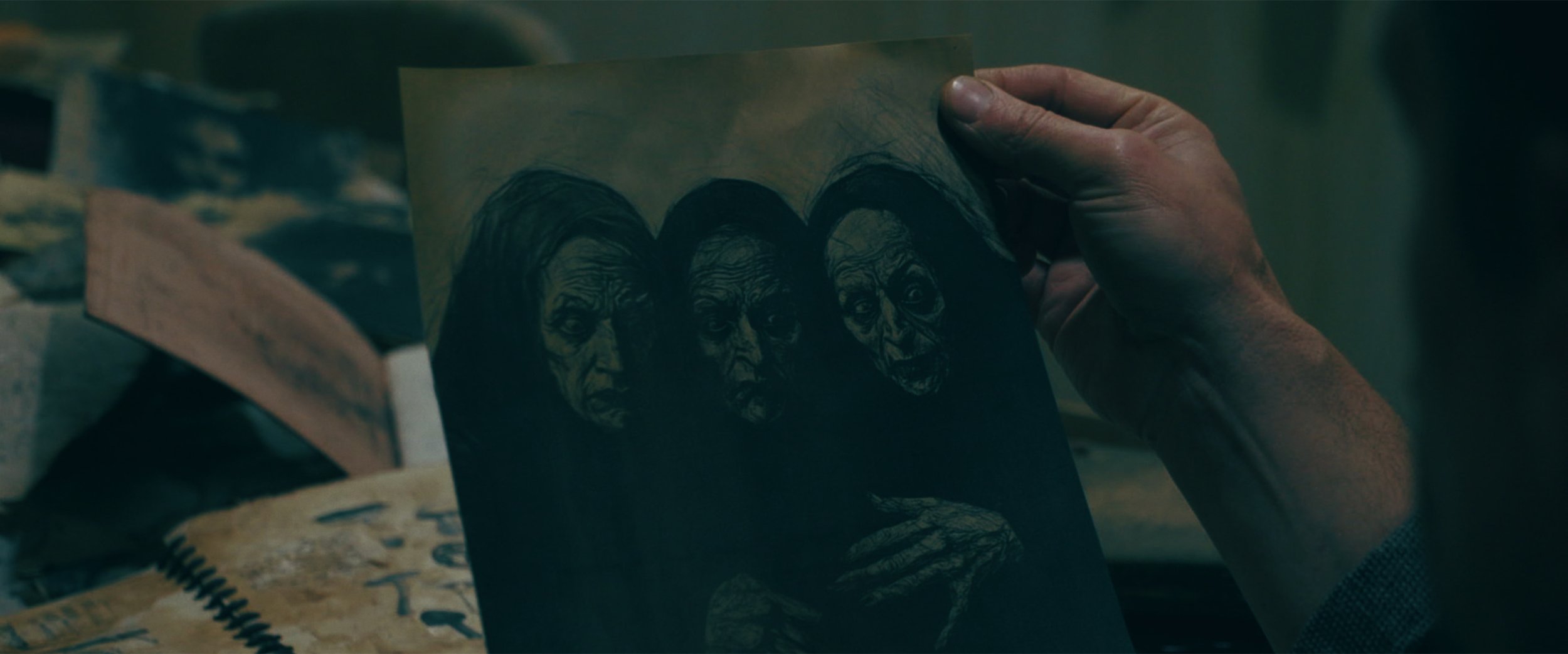
Written and directed by J.P. Davidson, THE CULL tells the tale of Niall, a man released from a life sentence after being wrongfully imprisoned for the murder of his mother. Now looking for a quiet life in the woods, Niall encounters hostile locals, strange visions and a terrifying entity that may be tied to his mothers past. Ahead of its world premiere, Gore In The Store chatted with the film's main actor Craig Russell. Already familiar to FrightFest audiences for his performances in such favourites as the zero budget COLIN, Welsh alien invasion flick CANARIES and more recently PROTEIN and THE ARBITER, Craig has definitively proven his genre credentials while remaining constantly busy in non-genre fare. While discussing his role as Niall in THE CULL, Craig also reveals the amount of work that goes into such a character, working with special effects legend Neill Gorton, his own feelings about the UK genre scene and FrightFest itself.
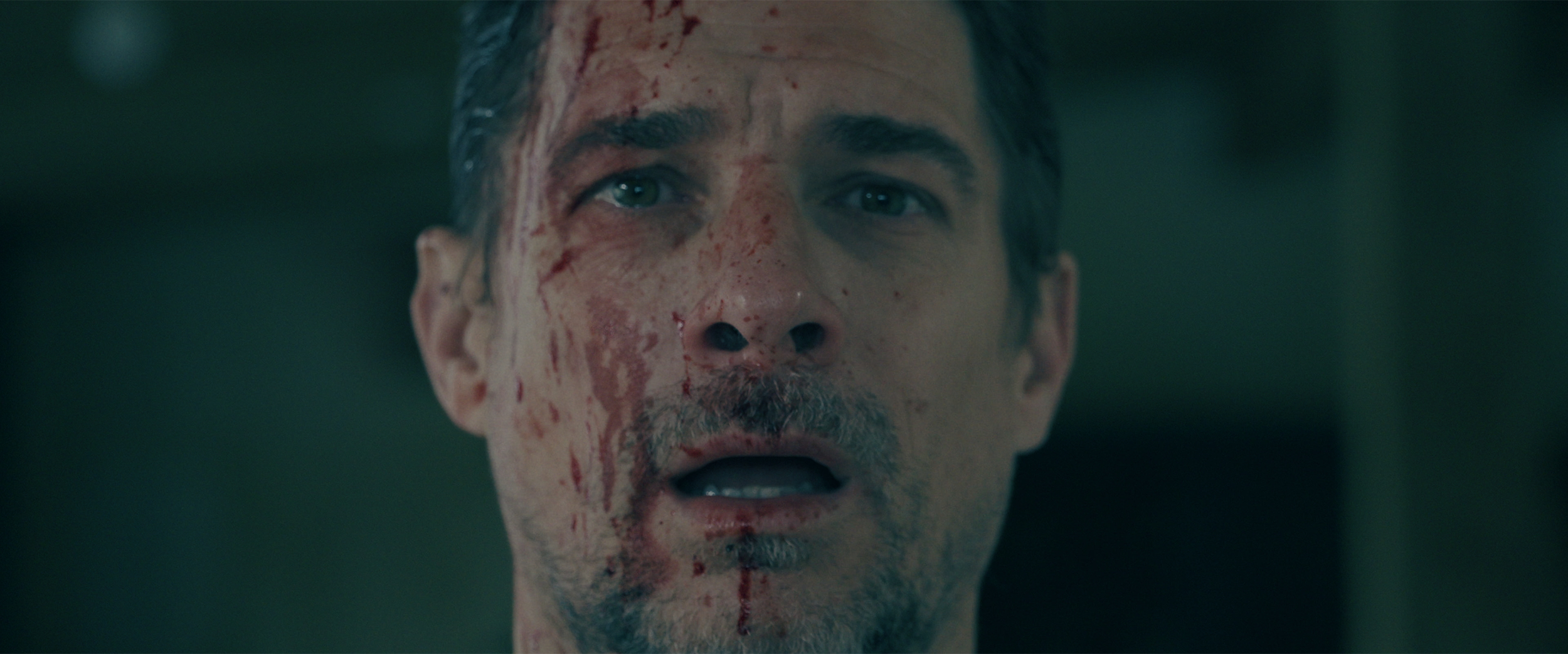
GORE IN THE STORE - Hello Craig. I was wondering if you could tell us how you came to be involved in this film?
CRAIG RUSSELL - My memory is awful for many reasons, so there’s a lot of things I can't remember. But this I do remember quite well, in that I was walking towards my car, and had a phone call from a first assistant director that I knew, and he said I've just recommended you for this job, but the director (J.P. Davidson) would like to see something. Is there anything you can suggest? I said, well, you can send him a screen link to PROTEIN if you like. And he watched it that night, and then he phoned me. He said “We loved you in PROTEIN. Would you like to do this?” And that would have been, I think, September 2024. It was a sunny day when that initial exchange happened. I can still see it in my mind's eye, and he sent me the script. He told me about it over the phone, and that hooked me straight away. J.P. is the loveliest man, such a kind, gentle, intelligent guy when it comes to films and filmmaking. So he had all these wonderful ideas, and he sent me the script.
But I never told him this. After what he told me about the film, where my character seems to be the only person in the script that doesn't know what's going on, but everyone else does, I didn't read the whole script. I only read my part, which sounds weird now in hindsight, but in my defense, I'd had brain surgery the year before, so maybe I just wasn't thinking straight. So when we filmed it, I was literally finding out and learning the stuff for the following day, the night before. So I was literally finding out just before we were doing it. Just to see how that would work on the character, and luckily J.P. was all gung-ho with that. It was great. But from the minute he started telling me about it, I was in, I was hooked because I'd never done it but I’d always been interested in folk horror, myths and legends. I love all that, especially in Cornwall, which is obviously one of the oldest inhabited counties in England. And everything about it just ticked my boxes really.
So can I just ask, are you from Cornwall?
CR - No, I'm not. But I live here now. My wife is Cornish, and I do as I'm told. She said we're moving, and I said right, you are. But I'm actually Welsh.
So, what was it like shooting on location down there?
CR - Epic, really wonderful. I was in nearly every day, so I lived there pretty much full time. But we we took over, and because it was November, this sort of holiday site was empty, and we took over this place in Mawgan Porth, which is not far from Newquay in North Cornwall, and so a load of us, the Heads Of Departments and myself, we sort of lived there for the whole of the shoot, and then a lot of the crew stayed on site as well, and everyone else sort of traveled in every day. It was just wonderful because we were in this valley surrounded by this wonderful woodland, which at that time of the year with the nights coming in, it was getting dark early. There were no leaves on the trees. It was spooky anyway, and as you'll know, having seen the film, the forest is very much a part of it. So it was just perfect. It was great, and I love shooting on location because for me as an actor, it helps excuse me, it helps me believe what I'm doing more. I find it easier to believe the others, but I need to believe what I'm doing. So I loved it. It was great.
What kind of research did you do for the part?
CR - So basically, the main one was the impact of being in prison and what it's like to be in prison. Obviously, I've never been to prison. I went to visit someone once in my mid-teens, and that was horrible enough. Never again! So I researched what it's like to be inside for life having to live for years by this very rigid structure of which you have no control, to then being let loose. I also researched all those cases, some of which are famous of people who were sent to prison for a very long time for something they didn't do, and how they then had to reintegrate back into society, trying to live a whole brand new life all over again. Once I had established that, I said to JP at one point, my character talks a lot in this, and he's just spent years not saying much, and I don't think he'd say this much. I think he's the only one who doesn't know what's going on here as well, surrounded by those that do. It's more important I think if everyone else gives out the information because the audience are like me and they're finding out with me why it's happening. So again, as I said earlier, luckily JP was just great and he's like, "Yeah, sounds brilliant. We'll do it." That's what he said. “Yeah, love it. Sounds great. Let's do it.” So it was just lovely.
After PROTEIN and now this, is it safe to say you have an affinity with this genre?
CR - Yeah, I like playing characters who, on the face of it, if you were to see them in the street, you wouldn't think anything of them, but they've got something going on deep deep down, like in PROTEIN, or in another film I did that premiered premiered at FrightFest last year, THE ARBITER, which was directed by Marc Price film. I do love and I am drawn to that. I mean, my favorite TV shows are watching Del Boy in Only Fools and Horses. This guy who's who's completely flawed, but he keeps it together long enough just to get by. David Brent does the same. Alan Partridge does the same, and that's just the comedy side of it. Paddy Considine in DEAD MAN’S SHOES, or even John Rambo, obviously you know, in RAMBO. I'm fascinated by those people who can creep along, doing their thing until something stops them, and then you see the real them. And I really enjoy that. As for the genre, it's a genre I enjoy, but I would like to do more, definitely. It's just a good fun genre because you get to see the very best of people in this sort of genre. We had Neill Gorton doing our special effects and the makeup. Now, whether you realize it or not, we've all grown up seeing Neil Gorton's work on the screen in big movies or things like Doctor Who, some of the biggest TV ever made. A lot of that's all Neill. And so to see him, watch him and his team come to work every day and do that was just brilliant, just great. And you wouldn't have that in any other type of genre.
There is quite an especially striking creature in the film. What was it like to work with that?
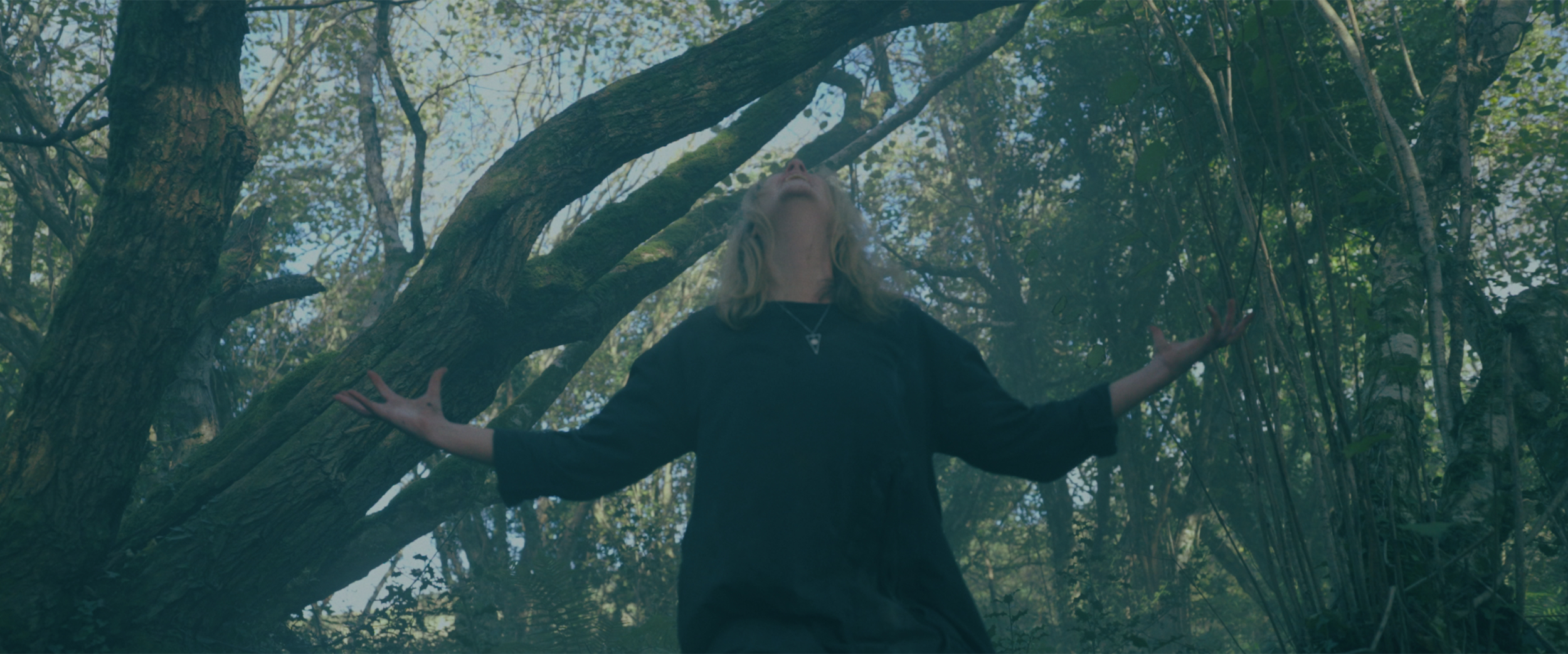
CR - So she, (Sarah Bowden) was in makeup for I'm going to say eight hours. She arrived at breakfast. I'd come down from the cottage after that and she was in the chair with Neill and his team, and they had worked on her all morning, so she didn't get going until after lunch. You’ve seen the film so you know what she looks like. I watched her eat a pasty like that. So, it was terrifying! (laughs) But as surreal as it was terrifying. I met her for the first time. I think that day. “Hi, lovely to meet you! Nice lady!! Great, brilliant. Okay.” And then I watched her slowly disappear into this thing and then, as I say, eat a pasty. That was funny. I've got photos on my phone of her dressed like that eating a pasty. And then I didn't see her again because I went off back to the stuff I was filming until she was fully made up. It was unbelievable, the CR - things like that, that Neill and his team did to me and my body and just seeing how he makes it all happen. But he talks about it as if he's literally talking about putting a stamp on an envelope. Yeah, he’s just a genius.
And what is the biggest challenge in making a film like this for someone like yourself?
CR - I'm very susceptible to the feelings of those around me, so on a film like this, shot at the time of year that we did it, in the cold and the wet. I think for someone like me, it's morale. Not for me. I enjoy being at work and being on set, but I think if you're a lead in a film, especially, or if you're an HOD in any department, your job is not just to turn up to work and hold that camera or put on that makeup or say all those lines, it's equally important that you bring a bit extra to keep the mood up, to bring the fun, to demonstrate the positivity and the professionalism needed to get through the day, to help people out if they need it. Take time to work with other actors on their lines, their script. Be patient when the makeup team need to do their thing, and I'm there for all of that. And I struggle if I see other people aren't. But on this, it was a CR - wonderful team. It was just brilliant. So for me, there was no downside. There was one bit where I was just freezing cold, but it worked for the part at the time. So it was wonderful. Everything about it was great.
And are you going to be attending the screening at FrightFest for this?
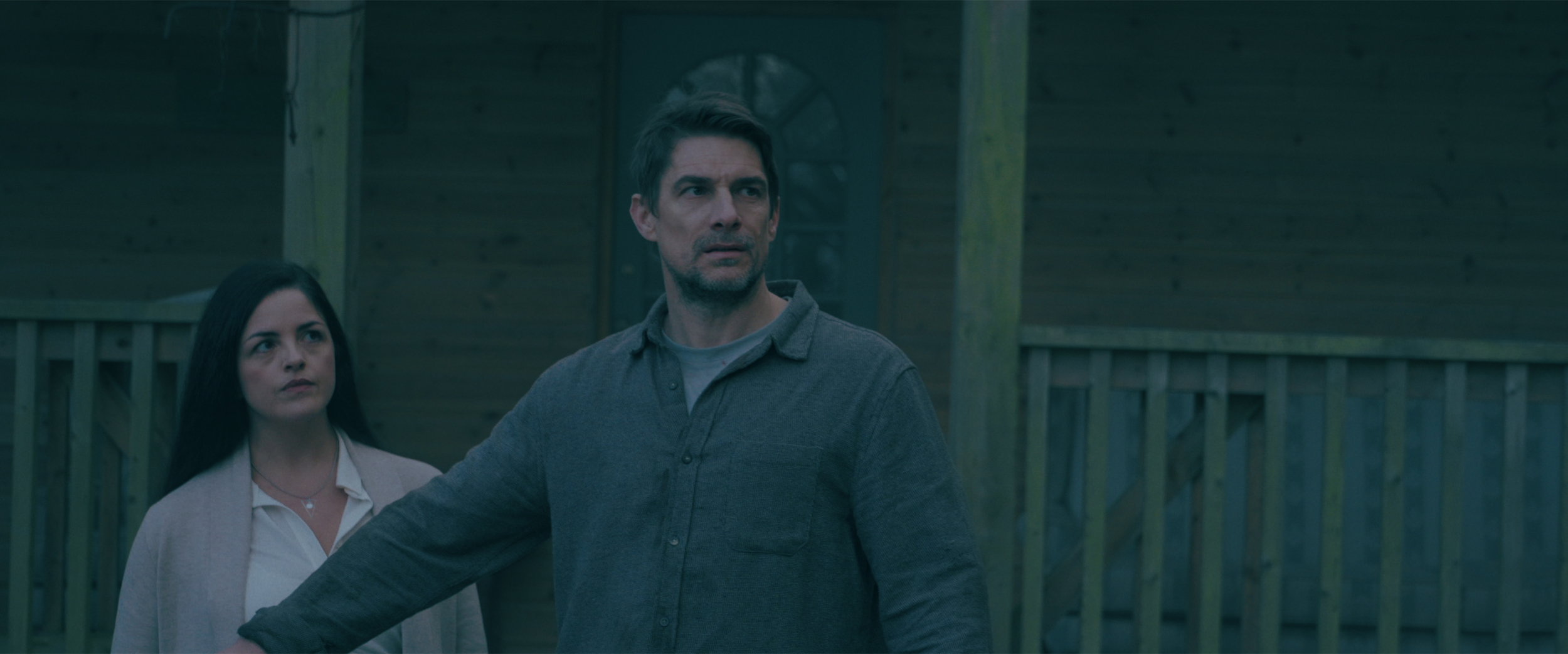
CR - No, I'm not, unfortunately, because it clashes with our youngest son's birthday. And as my wife, Kate Edney, who plays Hope is also in this, we couldn't exactly turn around to him and go, "All right, see ya," you know, and obviously we can't take him either.
I talk to the FrightFest guys quite a lot because the first film I showed there was a film called CANARIES in 2017, I think it was. A film that I produced. We shot it for 29 grand across three continents, and it premiered at FrightFest, and we sold it all over the world. It was a really popular film at FrightFest, and I've sort of kept in touch with the guys ever since. They took PROTEIN and THE ARBITER, and obviously, I was there a few years before with COLIN. When I was there with PROTEIN, I'd told them about THE CULL, and they said, "Oh, well, that's that sounds like our cup of tea," and they were keen from the off, but unfortunately, because of all the work that had to be done in the film in post, it wasn't quite ready for the for the summer deadline, so I’m grateful that it's in the October lineup.
So you're definitely a bit of a FrightFest veteran then?
CR - Yeah, and I enjoy it, it's great. People from all over the place get to premiere their movie that they may have made, like in the case of COLIN for 45 pounds, for next to nothing, and they get to screen it in Leicester Square. You know the home of the premiere in the UK, so it's wonderful. And the guys are great fun, and the atmosphere is always brilliant. The fans are the best, and I just love it. Sign everything that people ask you to sign. Photos galore, just brilliant, wonderful.
As an actor, how do you find the state of the genre scene in the UK? Do you think it's been supported at all?
CR - No. The problem with the genre scene, in many ways, is not unlike the soap opera category, in that people who make genre movies and people who work in soaps have to work incredibly hard to create something with a massive fan base, and yet there's never been the respect it deserves, even though it's fed entertainment into homes since the 50’s and 60’s, and it's the same with horror, really. It's not the same in America. You make a decent horror in America, and you're laughing, they're on it like a shot. But in the UK, it's so hard to get a genre movie financially backed by a studio or by a funding body or a governing body. I remember after we did CANARIES, which we made for next to nothing, we sold it to Sky Movies for eighteen months, where it was one of their most watched films. I remember more people in Wales watched CANARIES than they watched AMERICAN MADE, that Tom Cruise thing, right? It did brilliantly and it went all over the world, did great business. And so, a certain funding body in Wales called me in for a meeting. They said, "Come in and bring your slate. We can't believe what you did.” So our slate was basically more horror stuff, and they looked at it all. They picked the one they said they liked and said, "Develop this and pitch it to us. You'll be all right." They didn't take it. They never gave us the money. They turned it down. Said, "Oh, we don't do genre." But why not? Because you will get a return on a genre movie if it's decent.
And you see that with this one, the amount of blood, sweat, and tears that goes into a film like this. Neil Gorton doesn't just do any old thing, and yet he worked on this, and certainly not for what he's used to earning, but because he likes to support the genre. I don't know any cast or crew who wouldn't work on a genre movie if the script was good. But after that, it's a tough sell. My next film I produced, THE CROSSING, that's another sort of genre film. It's about a cult, but it's got sci-fi elements to it, and we know that it's the sci-fi elements that will get it noticed. People will come for the sci-fi aspect and stay for the cult thing. But it's going to be tough. Even though it's looking brilliant. So I think to bring that back to THE CULL, it's hard to say at this particular moment in time, what will come of this. I only recently watched THE SUBSTANCE. Could you imagine pitching that in Britain? It would get nowhere, but in America it wins Oscars. It wouldn't get off the ground here.
But to end on a higher note, the best thing about genre movies are it's easier. It's easier to make them because the genre fan base are the most loyal and the most hungry for more content. So it's a great opportunity for people who perhaps have never made a movie before or don't have much money to make a movie to get their film seen. Which is why festivals like FrightFest are so important, because they will work directly with the filmmaker to give a platform to their project, and that's why we're talking today. So there are a lot of positives. The only negative side is the lack of respect and support. The positive side is endless. The positive side is endless for this genre.
Iain MacLeod
