
IN CONVERSATION WITH CORIN HARDY
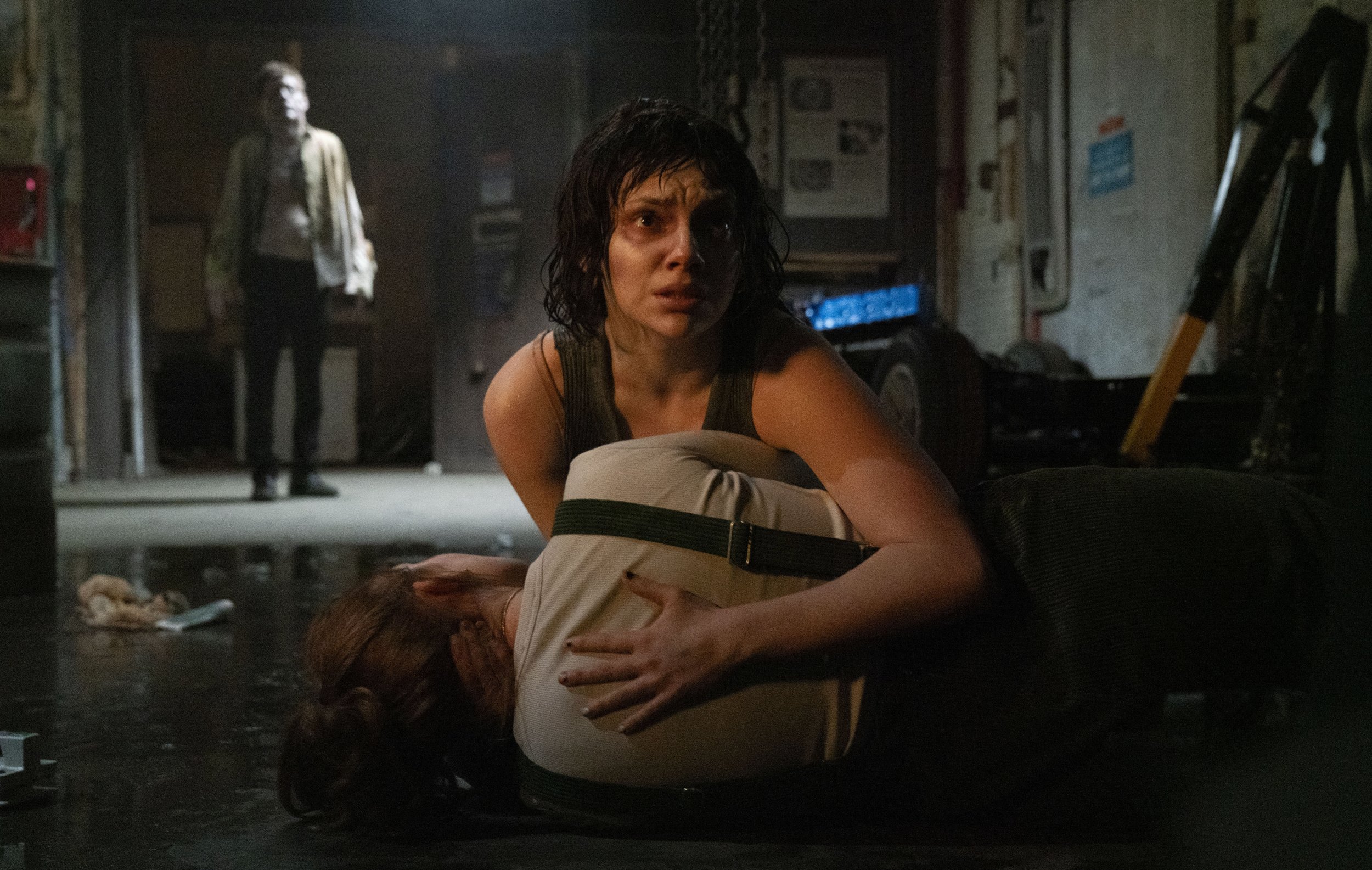
The supernatural high school horror WHISTLE directed by Corin Hardy, revolves around a socially mismatched group of high school students. Newcomer Chrys (Dafne Keen), a recovering addict, is burdened with the guilt of her father's death. Living with her comic book nerd cousin Rel (Sky Yang), she is reluctantly pulled into a social circle that includes some of the school's most popular people. There's Grace (Alissa Skovbye), her boyfriend Dean (Jhaleil Swaby) and his basketball teammate Noah (Percy Hines White). Meanwhile, there's Ellie (Sophie Nélisse), who draws Chrys' eye. When they happen upon an ancient Aztec Death Whistle, they are unaware that it will summon their deaths. Soon the body count is rising, as they try to learn of the artefact’s origins in the hopes of saving themselves.
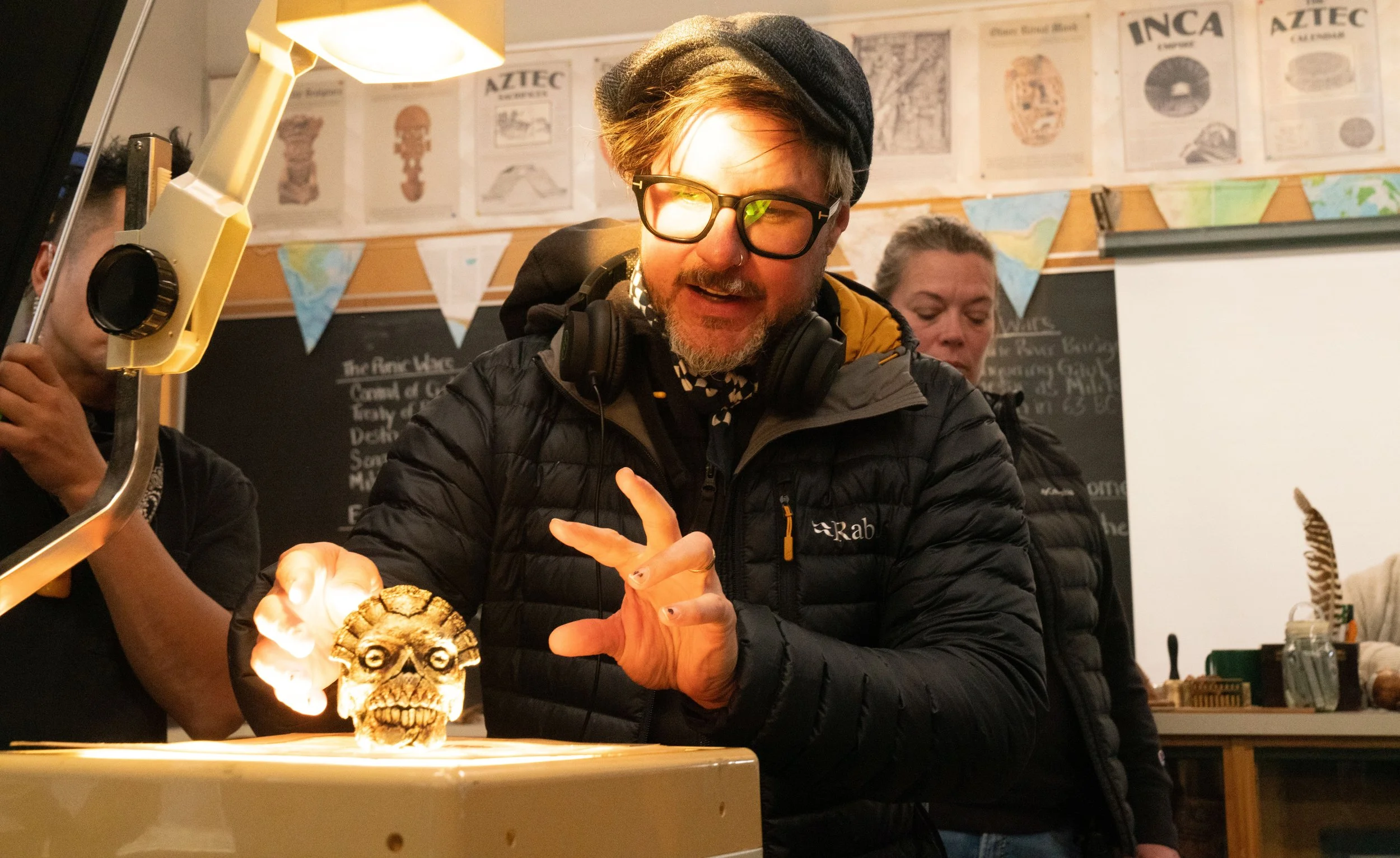
Hardy's previous credits include THE HALLOW, about a family who move into a new home in the woods that is possessed by a demonic force, and THE CONJURING 2 spin-off THE NUN. In conversation with GORE IN THE STORE, Hardy discussed imposter syndrome and Robert Rodriguez's inspirational advice. He also reflected on his affection for the high school horror movie, being drawn to emotion, and the chilling and profound mythology of WHISTLE.
GORE IN THE STORE - Have the three feature horror films you've directed given you an appreciation for the genre that you would have otherwise missed out on?
Corin Hardy - I guess I can't help but go to a more logistical answer about the experience and understanding that comes with the writing or reading of the scripts and translating them into what I think would be successful or effective for storytelling in the horror genre. This could be around the mythology, for example. I'll use various art department and effects, and so, it has been about gaining experience in all of those areas as I've gone along.
But I would go back to watching horror movies as a child and being fascinated, captivated and scared by them. It felt like it was this dare to watch them. It was a bit dangerous and was something that felt unlimited, in that there was this whole world to explore within horror. So, that was something that I always wanted to recapture and try and make real for myself and for others. And I'm still exactly the same way, but hopefully, I've gained experience by trying out different forms of storytelling in the genre.
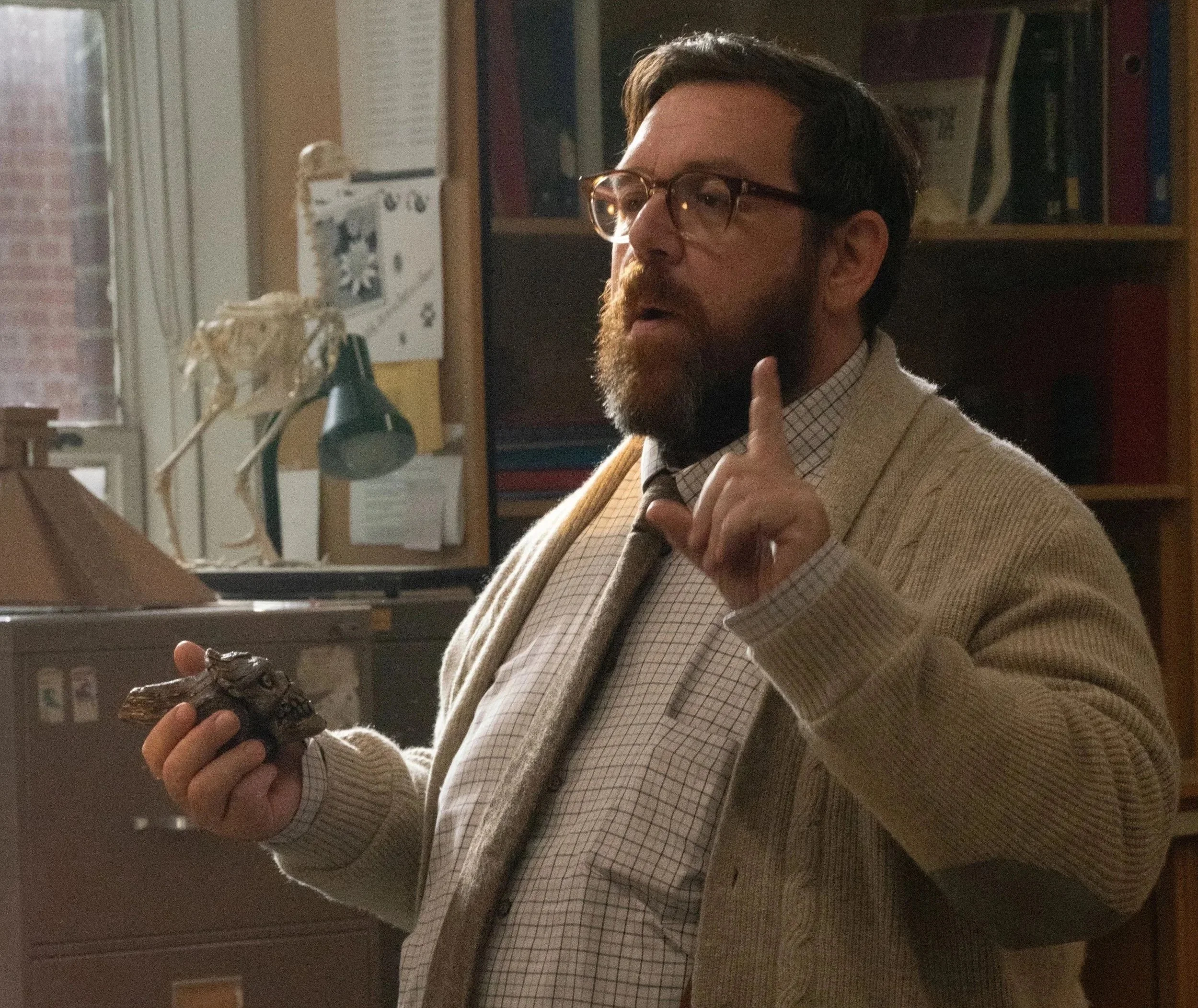
I've spoken with filmmakers who say that it took a number of films before they felt they could call themselves a filmmaker. When did you feel that you could first call yourself a filmmaker, and despite having made three feature films, does each still present challenges that can lead to self-doubt?
CH - Well, it's interesting, because firstly, the idea of imposter syndrome is constant. I won't say it's healthy, but I've heard it said that anyone who's in touch with their creativity still feels, because how could you possibly have mastered everything in a lifetime? So, there's always this sense of a challenge, and although I've made three horror movies now and a TV show, a gangster drama, as well as some short films and animations, every time I finish, I still feel that I've barely touched the iceberg of what I want to do in film and in horror, but also outside the genre. I've been through at least fifty projects already that haven't been made yet and may never get to see the light of day. So, there's always a sense of what we call imposter syndrome.
But I do remember when I was younger, making movies with friends and experimenting. I wondered how you'd become a filmmaker, make music videos and are able to call myself one. Reading Robert Rodriguez's book REBEL WITHOUT A CREW, was one of those inspiring moments. I'm pretty sure at some point in that book he said one of the big things to get right out of the way is, "Call yourself a filmmaker now. If you're making anything, you're a filmmaker." So, that book really inspired me to make my first stop-motion movie, BUTTERFLY, which was a half hour-long film. When I finished that and got it into a film festival in Edinburgh, that was the moment in time I thought I could now call myself a filmmaker, because I had made a film. Now it wasn't a feature, and so, when I made THE HALLOW, I felt vindicated. But there's an ongoing feeling of not having done what I wanted to do yet.
In what ways did making WHISTLE fill that hole or space?
CH - I guess two things come to mind when you ask that question. One is the American high school horror movie genre. I probably always fancied dabbing in the genre given the movies that inspired me growing up from A NIGHTMARE ON ELM STREET, THE LOST BOYS, FRIGHT NIGHT, THE BLOB, THE BREAKFAST CLUB, DONNIE DARKO and SCREAM. So, there's a part of me that wondered what my American high school movie would be. And when I read Owen's script, I thought, 'Oh, this is it.'
It dictates the world and environment, and then it's about how I can bring my vibe into that world with what I felt was quite a fresh and mysterious mythology. The other thing was not so much filling a hole as you put it, but the story had heart and emotion. It was about grief, and it had a blossoming romance amid the terror unfolding around it. So, it ticked my boxes of trying to balance horror with heart and characters that were going through something in their lives that could be relatable.
I'm conscious of trying to tell stories that will emotionally connect. There were a couple of personal family bereavements that were spiritually inspiring, and so, the story of WHISTLE really tapped into that. Owen also felt the same way about this idea of "memento mori", which means to remember that you will die and therefore live your life to the fullest. And then the deaths, the outrageousness of those sequences filled the hole.
A recurring thought while watching WHISTLE was how small choices trap these characters in a life-altering nightmare. If they had not retrieved the Death Whistle after their teacher confiscated it and if Dean hadn't encouraged Grace to use it, that's the difference between living or escaping this nightmare.
CH - It's fate, right? And while it isn't a FINAL DESTINATION movie, where you get to replay something and imagine if you could have dodged death, it does make you think about fate and whether you believe in destiny. Is it prewritten or is it changing constantly as you shape your own journey with all the different decisions that you're making? And that's part of that fascination with unknowable things or the supernatural. And "memento mori" is a phrase I've grown to love. It can sound depressing, but it's quite enlightening if you can remember that everyone's going to die. We're all here for only a short amount of time, and I guess if these characters hadn't had a Death Whistle hunting them down, they would still have needed to challenge themselves to live their lives to the fullest. And in their teenage environment, this fictional steel mill town, they may not have got out of that alive anyway.
I remember speaking with a friend about modern horror and how films are so driven by messaging that we're losing the knack for telling a straightforward scary story. On reflection, I suppose it's always a balancing act between themes and the visceral nature of the genre.
CH - Yes, it's a balancing act. I definitely don't think of, as you put it, messaging so much as just creating a relatability with the characters and what they're going through. Otherwise, it's cardboard thin. But also, a story about an object that calls out to your death and the idea that your death is out there, and it knows what you look like, and it's just waiting, and if you hear the sound of this whistle then your death will visit you in the next few days, was chilling and profound. So, with that mythology already baked into the concept, I had to walk a tightrope. I didn't want it to be anything heavy-handed, but I also wanted the story and characters to be emotionally moving.
Watching IT: WELCOME TO DERRY, one of the things that struck me was how the simplest of touches can be the most effective when it comes to unnerving or scaring an audience. It's not necessarily about jump scares or what's lurking offscreen. Instead, it's the horror that's right in front of us. In WHISTLE, the idea that the moment you are born, so is your death, is a simple but effective one.
CH - That is the best type of realisation, especially when you read it in a script, because when it's in the concept itself, if you can pull that stuff off, it doesn't cost you much. Generally, it's in that tension, and I'm not saying I achieved this enough in WHISTLE, because it was, in a sense, a visual roller coaster of a ride. But I did respond to that, and that's down to Owen because it's in the core concept of the story. It's something which I thought could translate really well into a film and potentially other films.
But that idea is also what differentiates it subtly from, say, THE RING and the cursed videotape, which if you watch, you'll get a phone call, and seven days later you're going to die. It's not specific to you other than that you watched the tape or if you messed with that configuration box [in HELLRAISER], those Cenobites are going to turn up. WHISTLE had that extra layer to me that set it apart because it had that notion that Ivy Raymore [Michelle Fairley] explains. "When you're born, so is your death." And then it's this idea that you might live a week, you might live ten years, or you might be lucky enough to live until you're eighty or ninety. But when you hear the whistle, it changes that, because however you are meant to die, it knows that, and it's drawn to you.
I said the idea felt chilling and profound because you're going to be faced with your own death, and it's going to give your life its death. Hence, it's this idea that death lives, which is a phrase I'd had for a while. I love these two words that are complete opposites, but when you put them together, there are a lot of thought-provoking ideas behind them.
Paul Risker