
IN CONVERSATION WITH HOWARD J. FORD
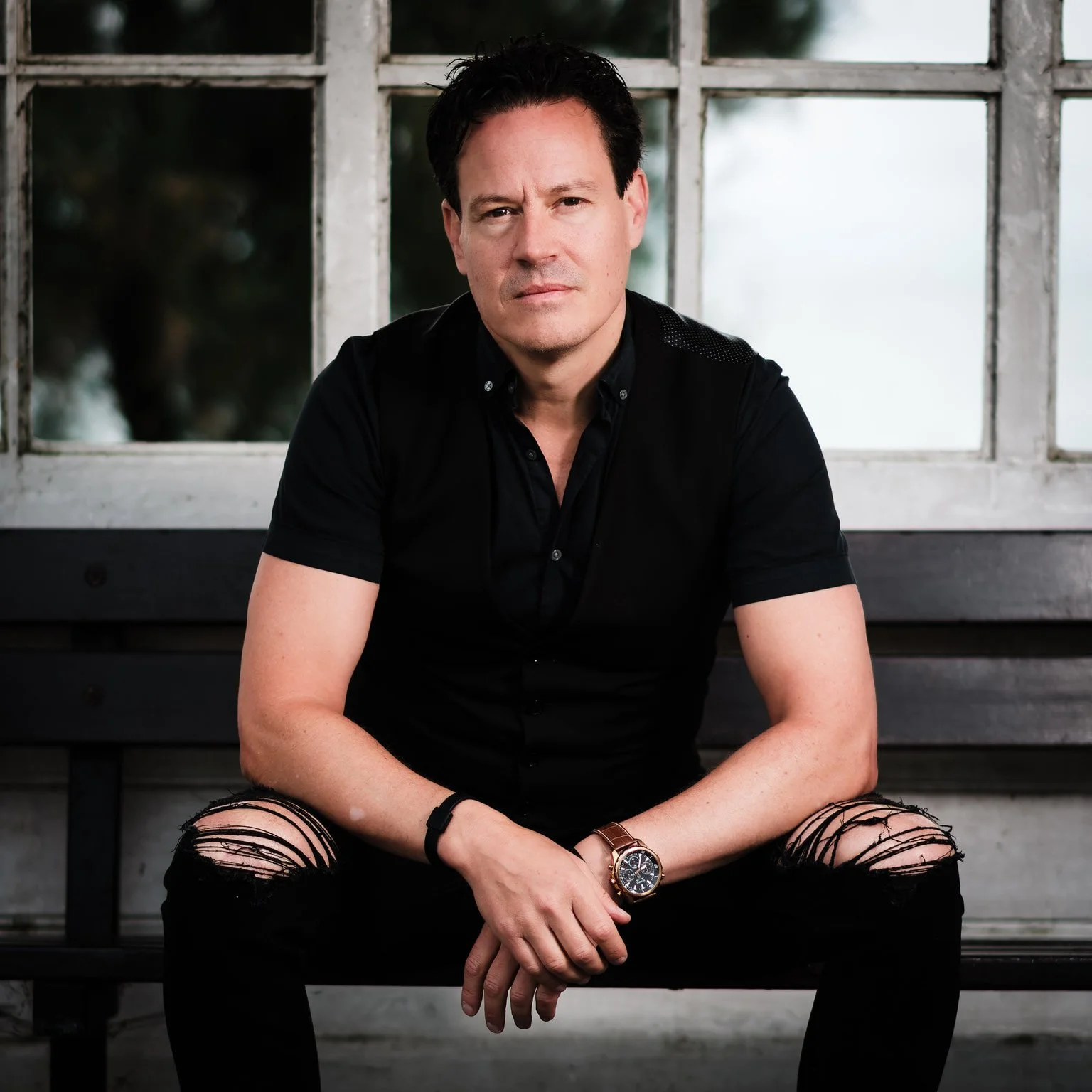
Since making his debut in 2010 with THE DEAD, director and writer Howard J. Ford has made a name for himself in the independent horror scene with a number of features and a large number of major adverts. With his latest feature BONE KEEPER, Howard takes on the creature feature genre with the tale of a group of underground explorers finding much more than they bargained for in a large underground system which an ancient, otherworldly creature calls home. Ahead of the film's World Premiere at this year's Glasgow FrightFest, Gore In The Store chatted with Howard to discuss the film and its origins, his own adventurous directing style and the state of low-budget filmmaking for genre directors and writers in the streaming era.
GORE IN THE STORE - So how did the idea for BONE KEEPER come around?
HOWARD J. FORD - I've wanted to do a creature feature for a while, but I didn't want to do a person in a suit type one, although there are some fantastic ones. I kind of waited until the technology got to a certain point, but I wanted to go back to a bit of an old school adventure thing mixed with horror. I like adventure stuff. I like adventuring in real life. And I wanted to do something that slightly edged into sci-fi, because I'm really interested in that personally; I read a lot of books about space and the universe. It makes me remember how small we are and insignificant, even though our problems do feel very real. So I wanted to do something a bit more old school and adventurous, but also mix in horror too. I wanted to take people to real places, real locations. We shot and went to dark, dank caves in Wales, which were pretty dangerous but fun. I even wanted to harp back to that slight hint of ALIEN and THE DESCENT. I'm never gonna beat these movies but I really respect and love them, so I wanted to tip my hat to them. I even wanted to tip my hat to AN AMERICAN WEREWOLF IN LONDON with the pub scene and things like that. I wanted to have fun, and I hope the audience does too.
You mentioned science fiction and creature features, but you also have elements of folk horror and even a little bit of found footage. Out of all those elements, which is the one you were keenest, to explore the most?
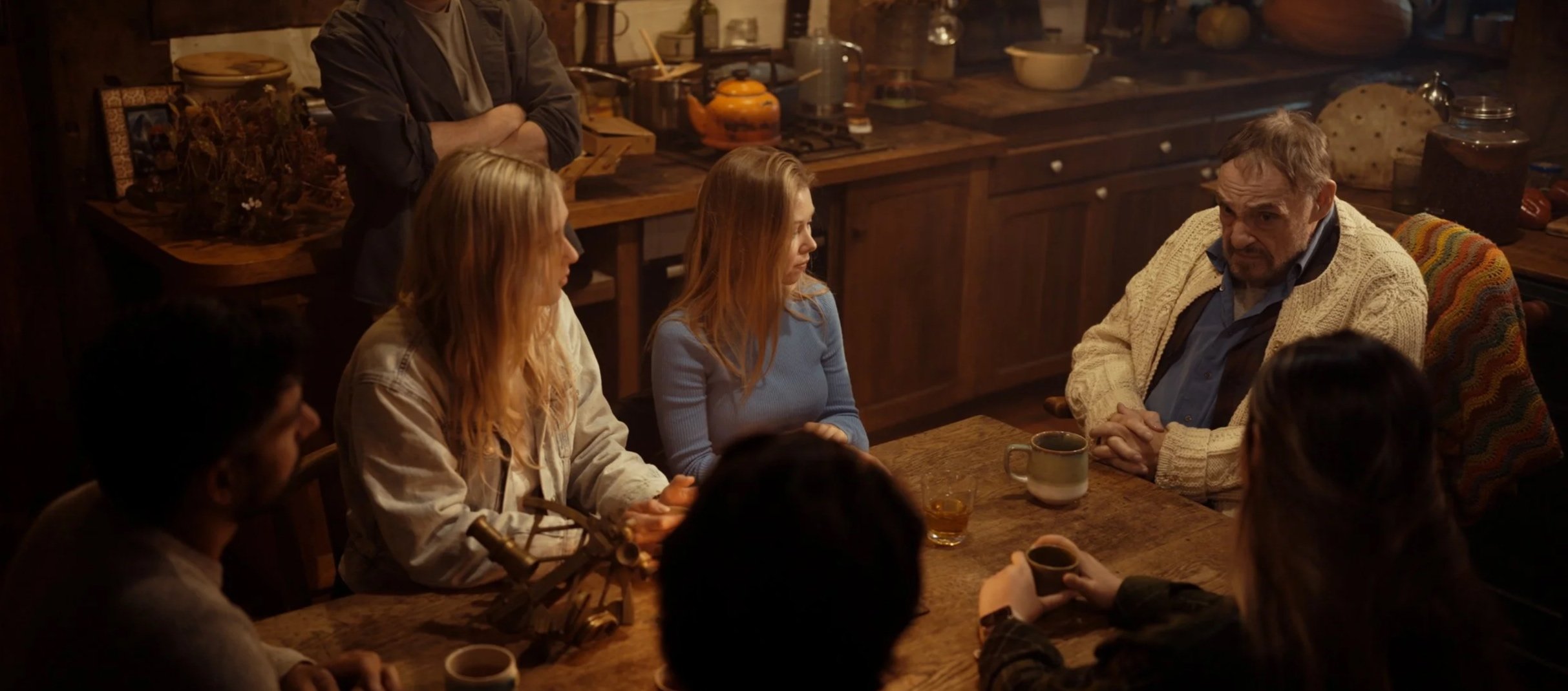
HJF - It was really the old school Creature Feature. When I first wrote the script for BONE KEEPER, I wanted to take the technology out. I know I have a vlogger in there now, but that came about later in a second or third draft. I was considering for a while having no mobile phones in it, none of that sort of technology. But I decided to include a little bit, but not to frequent the modern world too much. When they go looking for Professor Harrison (John Rhys-Davies), who knows something about this creature that was captured on Super 8 film in this cave, I wanted the journey to be physical. To have them physically go to places, like the pub, which you've already mentioned. So it's also taking audiences on a bit of a journey as well. And I love real locations. I don't like to do green screen too much but I have to do it sometimes, but I didn't do it on BONE KEEPER. There's no fake backdrops. It's not a studio. Everything that's there is all real. So that's part of the journey for me as well. I love that in real life, the adventure.
The creature itself is quite distinct. Where did you get the idea for it, and how much design work was involved for it?
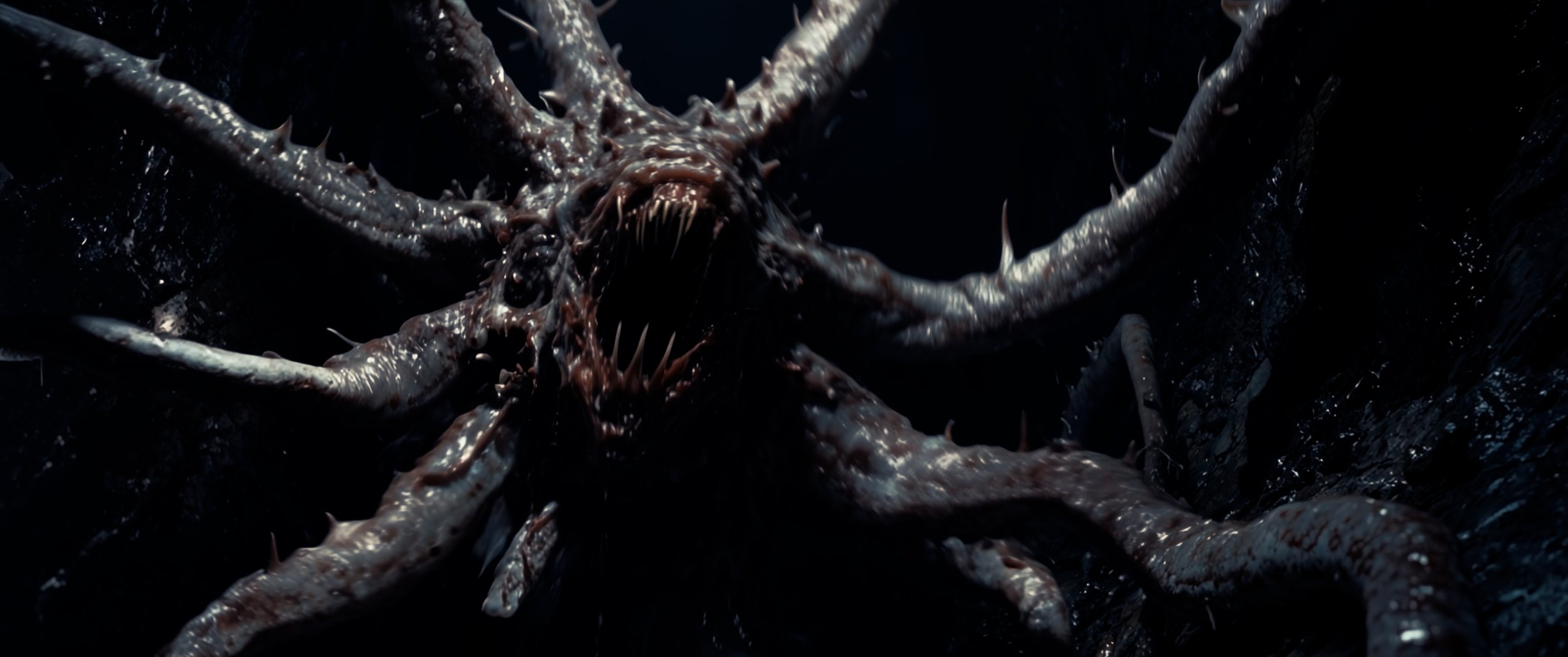
HJF - There actually was a lot. Originally, the creature evolved from what I thought it was going to be to what I realized I could actually do when I got the talents on board for who designed it, the main designer being Giordano Aita, a lovely man, out in Italy. I went there to do design work with him, before we animated the creatures. He's a real artist as well as a real artist's guy as well. I found him, would you believe on Instagram! We were already in pre-production, and I had certain people I was going to use to create the creature. And then Louis James, who plays Ethan, did a fantastic job on both sides of the camera. He found this guy online, and I looked at him. He's designing all these incredible creatures and weird and horrible stuff. I messaged him, just a compliment at first, and then again saying, "I'm going for this location recce, for this cave movie. And I need a creature. I'm going to build some of it and this and that, but I need some animated creatures. Look, do you think you would mind?" I sent him some footage from the location recce. So we went to the location, took a few actors, Sarah Alexandra Marks, Louis James, Tiffany Hallam Daniels and a bunch of us, filmed it, and then I sent him footage. I said, Okay, can we have a creatures, sort of tentacle thing coming down? We started to develop it like that. And I realized what we could do. And then it expanded from that.
Initially it was going to be one main creature for a while. I don't want to give too much plot away, but they get more than they're asking for. It evolved. And it was really lovely to me because we were filming in these locations, taking this footage, but what was great was because the technology is the way it is now, while we were filming, we'd be sending shots back and getting images of the creature already appearing in the shots. So it was great for the actors to see that, because then they could visualize it a bit more, rather than being in a situation where they couldn't understand what was attacking them.
You mentioned the locations there. In a lot of your films, the location seems to be quite a primary element, from THE DEAD films to this. Is it safe to say you're a bit of an outdoors person?
HJF - Yeah, I do like a bit of adventure, I've got to say. I've probably said it before, but if I wasn't making films, I'd love to be on a ship, discovering new lands. I love that. We live and die, and we're not going to see 1% of this earth, if at all, so I really like to go to as many places as possible. I've always loved movies. Growing up, watching Sergio Leone as a director I really, really loved. I loved sitting in my front room in Hove, watching this movie, and then I'd be in the desert, with some character, boots on the ground, the desert, the dust and all that sort of stuff. So I love taking audiences to places. I feel like when we watch a movie or a TV series, nine times out of ten, 90% of them are set in a room. You're sat in a room with four walls, and you're watching something with four walls in it, another room. I like taking people to places. So that's really a feature in my films. With BONE KEEPER, this is the closest to home I have filmed for a while. The previous movie was in Thailand, THE DEAD in Africa and India, NEVER LET GO in Morocco, and Fort Ventura with ESCAPE. So here it was a drive up to Wales. It was quite a novelty not to have to get on a plane. But we're still going down to these dark, dank and dangerous, real caves. And the cast and crew were amazing. They did a super job.
And now you're coming to Glasgow!
HJF - Another adventure, although I do have to get on a plane for that one. The train journey’s a bit long! But no, I'm really excited about that. That is the pinnacle moment, really, to be honest with you, because you know, as a genre filmmaker, to take your film to genre fans, whatever they think of your film. You're getting them in a room, they've turned up, they've left their home, they've gone to a place, they've got a ticket, and they're sat there, and they're going to watch it, and they're going to think, I don't know what they're going to think, hopefully they have a good time, but that is just so great. There is an energy in a room. And that screen in the Glasgow Film Theatre is so well set up, it'll be a great experience. I'm looking forward to it. BONE KEEPER is a weird one, because normally there's lots of things in every film I make, I'm not entirely comfortable with. Things that in your head, you started with this vision, and then you got there and you couldn't do it in the way you wanted. But I'm more comfortable with BONE KEEPER. I'm glad I've done it.
Am I right in thinking that the main cave you filmed was Clearwell Caves?
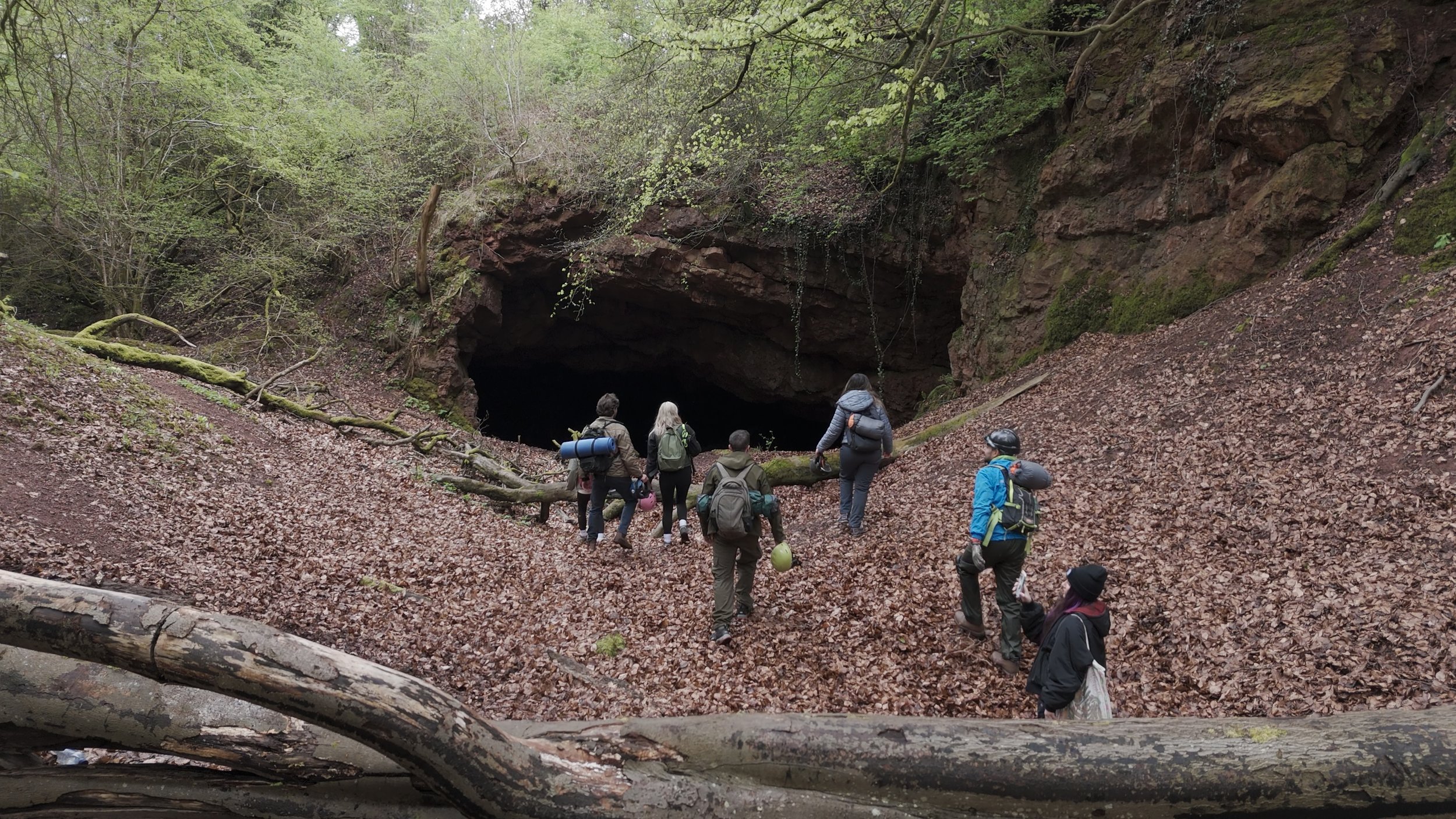
HJF - A chunk of it was done in Clearwell. There were several caves, actually, but Clearwell was, I'm going to say, the easiest one to access, because it is a public access cave. You can go and visit it. It was much safer for us to do it there, and it was much easier for us to record the sound well. Luckily, the owner was very flexible. He let us go to parts that are not open to the public as well. Because the cave goes off for miles. I mean, honestly, you go in the wrong place, you get lost. So we were allowed to go to certain parts where the public never go, but we also went to other caves that were in the middle of nowhere.
I shouldn't admit it, but we'd be filming, and next to the actors, there would be a hole in the ground. And we would get our torchlights and look down. I don't know how far that goes, but if you fall down there, you're not coming out. It's game over. So it was a bit dodgy. There was one moment where we're filming the actors coming up some rocky surface to a different chamber, and I looked to the left, and there was a huge boulder that must have weighed several tons. And it was held by a pebble, and I was thinking, "Well, if that thing goes it's gonna take me out, I'm dead, and then it's gonna go down the slope." And it was kind of crumbly. I said "Guys, let's shoot this really quick and just get out." I don't know how we got away with it, but we got away with it. And all the cast were just so up for the adventure, and they got on with it. They all did an amazing job.
A quick aside, I grew up in the Highlands of Scotland, where there were a lot of caves and holes, where my friends and I would always dare each other to go. So while watching your film I was getting wee flashbacks to that kind of stuff.
HJF - Not bad flashbacks I hope!
Oh not at all. We found a hole in a field, just beside where I lived out in the country, and it was the strangest thing. It was an actual built tunnel that you could only really crawl in and we had no idea where it went. We would only get so far, before we freaked out, and ran back up outside.
HJF – Your gut just tells you, doesn't it? When you kind of go, this is wrong, but I love that kind of adventure. As a kid myself, my brother and I would be out with friends and that's the sort of stuff we'd be doing, trying to find caves, trying to find things. Something else, I must mention, it's just trivia, but when I started shooting films aged 13, we'd go out up to what we call Devil's Dyke near Brighton, which is a place like you've described, that had hills and holes and valleys and stuff, but the Super 8 camera that you see at the start of the film is my little cameo. That Super 8 camera that Wheeler, who I play, uses is the camera I started making films on as a 13 year old. So I thought, hey, full circle! Of course, it doesn't end well for him, without giving too many spoilers away, but that was nice to do that. It felt like going back to doing what I was doing as a kid.

When you're writing scripts and coming up with ideas for locations, does that make it more difficult for securing finance? Do you get producers saying, Oh, can we not just set it somewhere closer to home?
HFJ - This is such a great question and I'm going to say, how long have you got? BONE KEEPER is one of my indie films; I produced it, I got the finance, and I did it. And those types of films are the films I enjoy making the most, because I don't have to ask the producer anything. I don't have to pick up the phone and say "Can we do this?" It's just me sitting there looking at a map, going, "We're gonna go there and we're gonna go there." If I want to change the script on another film, I'd have to call the writer, but I'm the writer here. So those things are much quicker for me, and I believe I get the most out of the budget in those scenarios.
Now the other scenario is where you've got producers, and you'll say to them, "We want to film there. We're gonna go to that pub!." "No, no, you're not gonna go to the pub next door!" "But it doesn't look good, that pub next door." "You don't have the money to ship the crew.” And you go, "What are you talking about?" Producers like to say they can't move the unit. "Can't move the unit. Gotta stay here. We're gonna get a portaloo." So you get these producer decisions, and of course, they think they're doing the best, and they're trying to contain the budget, and they've got a hell of a job to do.
But I like to do my indie films. I like to design them. I like to go, okay, that's what I'm doing, but I'm going to go drive or fly for a location recce. And then I get there and I get another idea, but it's not set in stone. So if I found a place like you described that you went to as kids, if I find a place like that, I'll go, do you know what? Let's write into the script, because it's just there. So we may as well make use of it. It's bucks on screen, as they say. I like to get all the component parts of the film, get a rough storyline, and once I've found the locations I'm allowed to use and can physically access, then I cement the script around that. Then you know you can actually do it for real, as opposed to sitting in a room with a coffee, writing a script, writing this thing and that thing, this car and that building and that place... and then I'd suddenly go, hang on a second that's going to cost so many million to to create this world. Why didn't I find the places first? So I prefer to do it like that. With BONE KEEPER, being one of my indie films it meant we could make stuff up. We found a different location, we found a different thing, or I wanted to use people I want to work with. I can do it because I don't have to run that decision by anyone. So those are the most fun to make. It was great in that way. We just organically got on with it and made changes when we needed to, and everything else. Does that make sense? I hope it does.
How do you find working in the genre scene, now, especially since starting with THE DEAD. Have you noticed many changes? Has it gotten easier or more difficult for you?
HJF - To be honest, it's gotten more difficult, especially with DVDs pretty much gone now. The DVD is basically dead, which is a real shame, because that was something people could actually have, hold in their hands, but now everyone's streaming. And the problem is it's much, much harder now because the first thing is that people pirate your film. That happens every time. You try your best not to let someone leak it but as soon as someone gets hold of it, someone leaks it online, and people are watching it for free. That kills your chances of doing more indie films, even if people could pay a couple of quid for it.
Now I've had a bunch of movies on Netflix, and Netflix is fantastic. However, a lot of people go, "Is it coming to Netflix?" And they say, well, I'll watch it if it comes to Netflix. But what they're really saying is, I'll watch it if it's for free, because I pay 10 pounds a month to Netflix, and I'll only watch the stuff they put out. So that's killed the indie scene in a huge way, that's taken the amount of money you can make back, because if Netflix decide they don't want a slimy Creature Feature in a dark, dank cave, then that audience will not see it. So you're now dictated by that. That's why a lot of people are trying to make things directly for the streamers, like Netflix, Sky or whatever, which is tough to do. It's really, really tough. And then it's all about names, and then you're back to the producer who's getting you shooting it all in a house, and you're not making what you want to make.
So it's tougher, yeah, certainly, but I'm still going to keep going. The thing is, I find ways with my indie films, I can make them with a small crew. I did THE LOCKDOWN HAUNTINGS, in lockdown with no crew at all. I went around the country on my own, like The Omega Man when there was no one on the roads. It was very odd but I had this loophole where I was allowed to still make entertainment. I was a filmmaker, as long as I didn't get within two meters of the actor. So when I did that film, I was literally doing the sound and doing the light. I was doing drone shots and tracking shots. I did the whole thing myself. And having done that, it basically means I can fire the entire crew and keep filming. I don't want to fire the entire crew. But in other words, if I have to make small films where if I have to do that, I can now do that, because I've done it for a feature. Unfortunately, films are getting smaller, the indie films are getting smaller.
To close things out, you're going back to your roots with your next film, THE DEAD 3. Can you tell us anything about what you have planned for that?
HJF - So my brother and myself, it's something we've kind of gone on and off on. I say we wanted to do it but there's a big part of us that hadn't wanted to do it because we had a really difficult time, nearly losing our lives out in Africa making THE DEAD. THE DEAD 2 was, dare I say, a little easier. I remember the crew at the time saying, "Wow, this is the hardest film ever!" And John and I are going, "Well, no one's pulling a knife or pointing a gun at us. This is actually pretty easy!" We had tough times doing those films and they're journey movies. So we feel like, it's a bit now or never about THE DEAD 3. John and I have had a few chats about it, over the last couple of years, and we have come up with the scenario. John has written the script. We threw in ideas, and he felt very inspired by a particular theme that actually touches on the pandemic that touched us all, but then goes in another direction. So I can tell you that much, but it is also another journey movie in a different country to be to be confirmed.
We're really hoping to make that film later this year, and just close off the trilogy, do the third and maybe re-release part one and two. So those three films hopefully would be re-available, because the rights have expired in 95% of the countries that put those films out. It's an ongoing discussion, and we're in the process of raising funds for that. If we get what we need, we hope to be shooting that definitely this year. I say definitely in this film business, nothing is definite, but we're gonna have a go.
Iain MacLeod