
IN CONVERSATION WITH ADAM O'BRIEN AND PHILIP KALIN-HAJDU
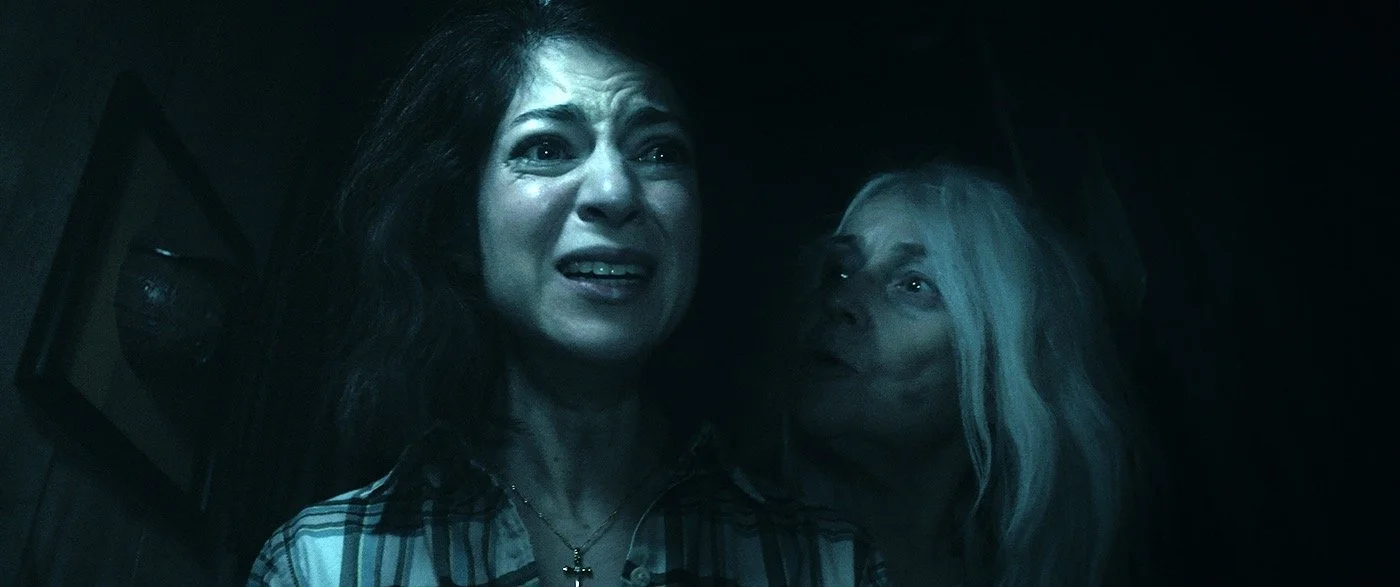
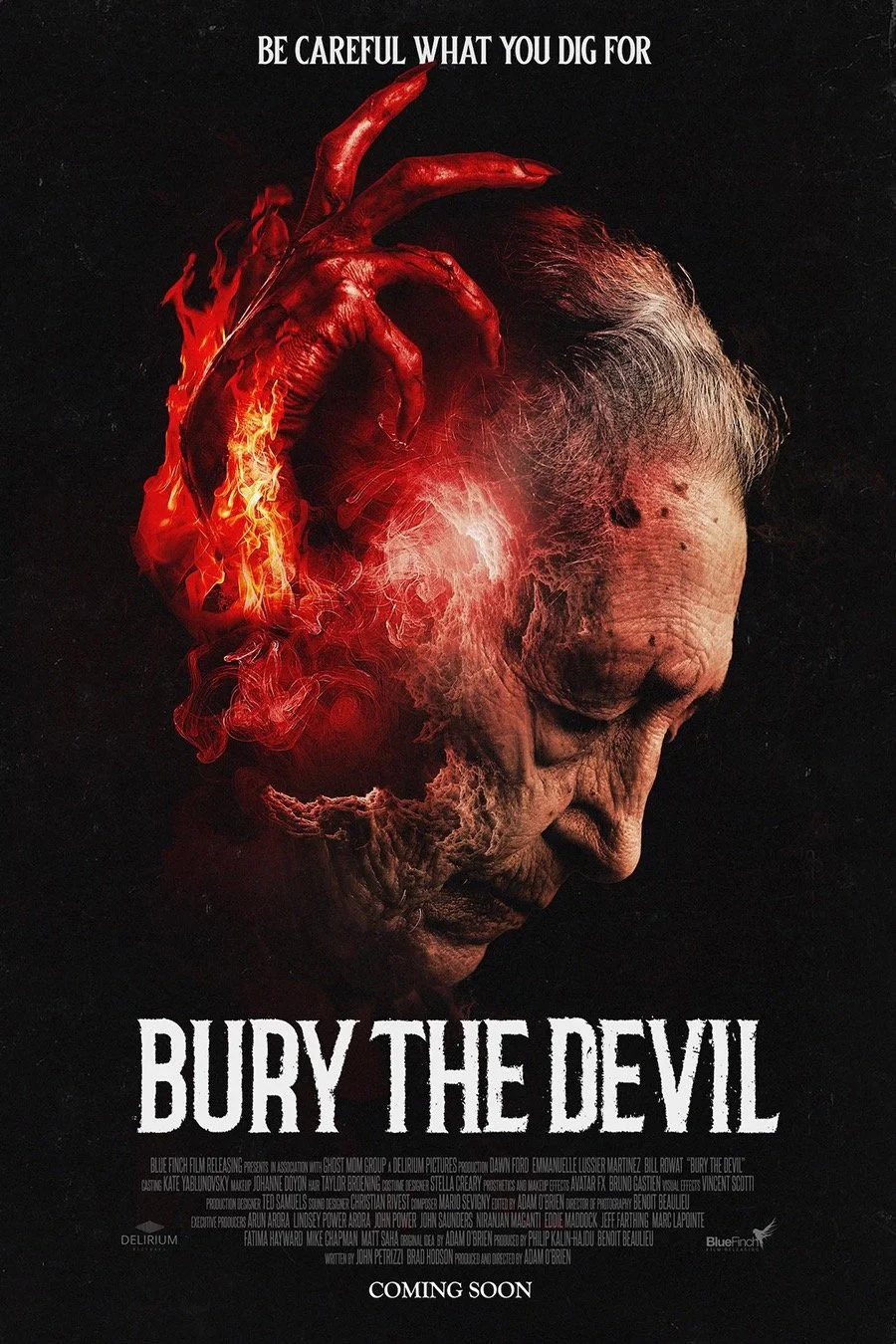
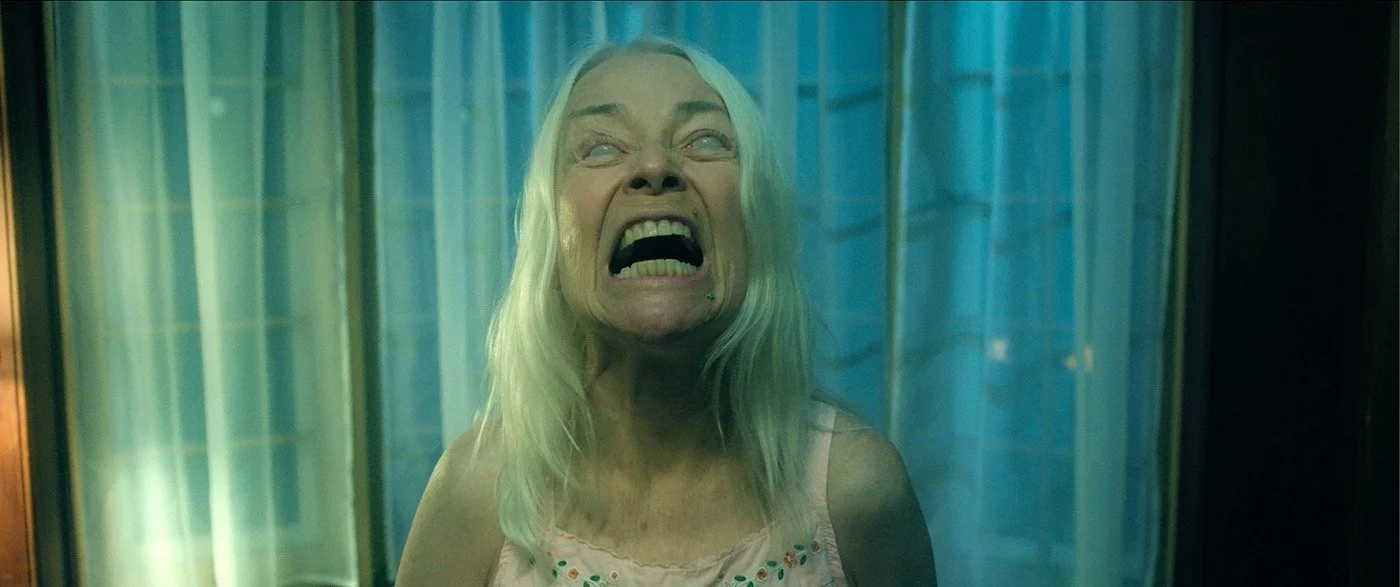
Receiving its world premiere at this year's FrightFest Glasgow, BURY THE DEVIL tells the harrowing story of Julia (Emmanuelle Lussier Martinez) a hospice nurse caring for the elderly Evelyn (Dawn Ford). As the night goes on, Julia begins to realise that sinister events of a demonic nature are unfolding and she must fight for her life. Unfolding in one continuous shot, the film is directed by Adam O’Brien and produced by Philip Kalin-Hajdu. After collaborating on 2024’s MOM, which also received its world premiere at FrightFest Glasgow, the pair have reunited for this ambitious horror. Gore in the Store chatted to them both about the film, its technical challenges and their forthcoming return to the festival.
GORE IN THE STORE - What were your influences for the story and for the way that you told it?
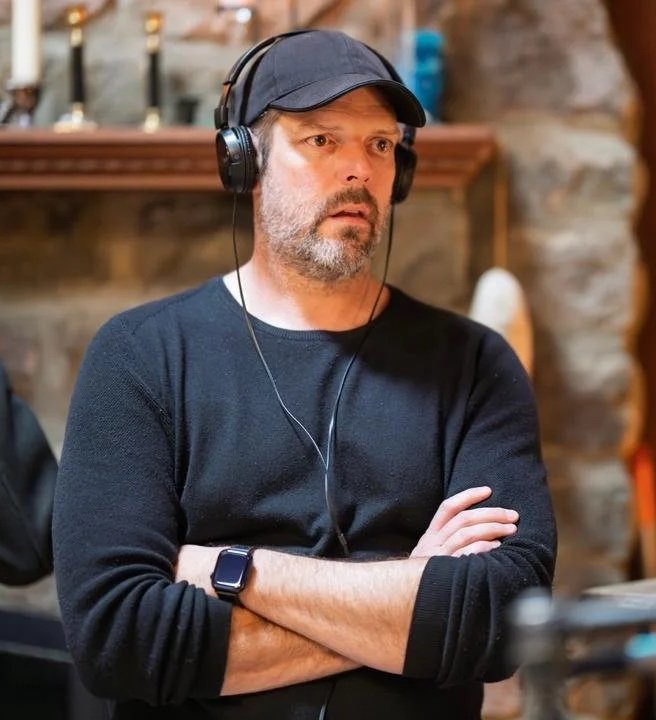
ADAM O’BRIEN - The inspiration came from a crazy idea from my DP, he came to me and said, “Hey, you should do a movie in one shot.” And I quote this, I said “You're fucking nuts, man, I'm not gonna do this. You don't know what you're talking about! It's so hard to do! How do you do character arcs, how do you do this, how do you do that? Oh, my God, that's crazy!” And I hung up. Then I was thinking about it. I was like, oh, maybe that can be interesting, though, because it's going to be so far from my previous film MOM and I wanted to do something very, very different. And the genesis of the story started like that, basically.
I called him back saying “Look, man, maybe I can find a way to do something different. Let's start to find a story.” And I discovered the first thing that I had in mind was a home invasion, but a reverse of a home invasion. That was the original idea. I didn't want to have people saying “We want to come in.” It was more about the people outside saying “We want you to come out!” So that was the idea, basically, and how we could do it in one shot. That was the genesis of the whole thing, like DON’T BREATHE, or THE STRANGERS. And he came after that asking what kind of story do we want to do? So we started thinking maybe all the characters can be in a cave, or are in a car or something.
Like I said, it's so freaking hard to do a one shot film, because most movies like these are more about the spectacle of it, or the tension you have in those eighty real time minutes. You cannot develop characters or stories properly, so you just need to focus on one thing and enjoy the ride and everything. So I wondered what if we take the story and we explore a bigger story and divide it in three, so the movie becomes a trilogy. So basically, this is the middle story. We're going to do an origin story to explore more and a sequel will just close the whole thing all together. And we thought if we could do that, let's explore three different genres, so it's the same story, but exploring three different genres. This one is the possession genre, the first one will be more in THE EXORCIST genre, and the last one will be the cult genre in the horror realm. And this is where the idea for this came to be a little bit more EVIL DEAD, to go full-on horror. So it's just exploring a little bit more how we can just put this thing together as a story, and with my background as a visual effects and post production guy putting a challenge on myself, making something like 1917 but with two dollars! Let's try to do that. Why not?
Philip, as a producer, how do you feel when you're approached with an idea like this?
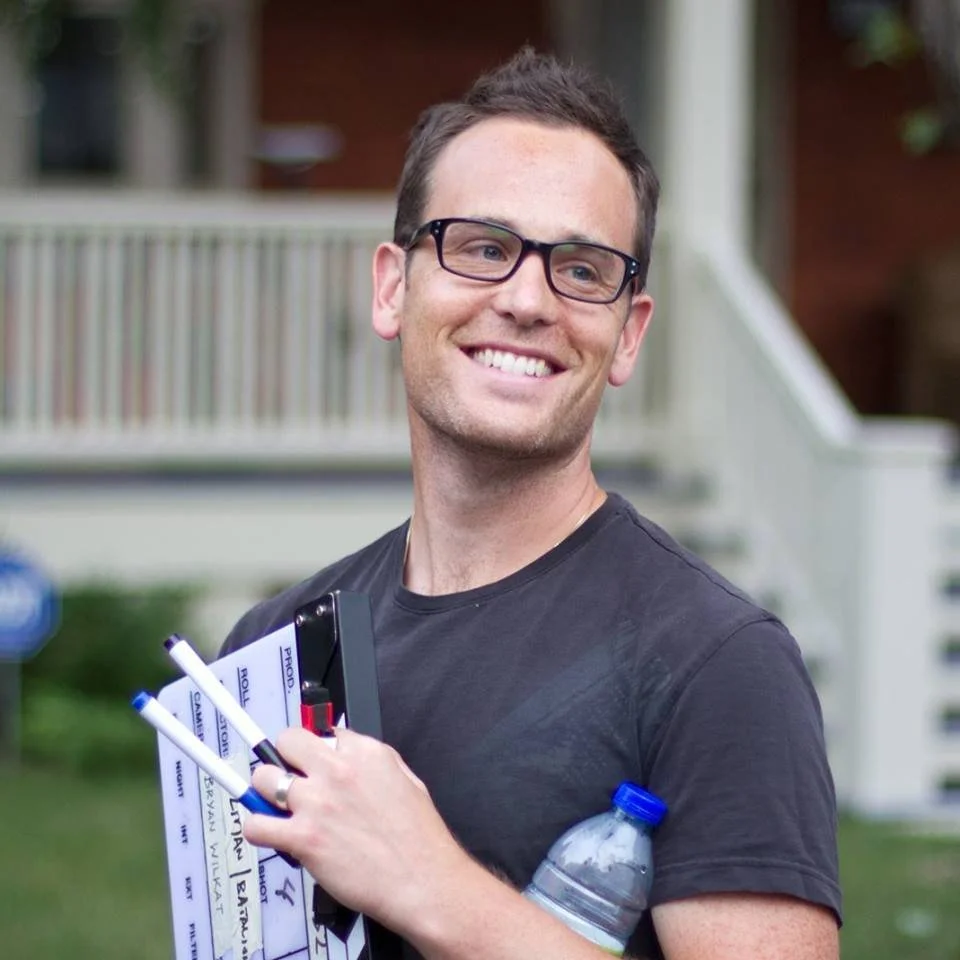
PHILIP KALIN-HADJU - That I need a vacation! No, at first I was hesitant, but very quickly, especially because we rehearsed how to shoot it over and over again in previous weeks, I actually really enjoyed it. I felt that it created a bond, a sense of family with the crew. Everyone was on sort of the same mission. There was no real downtime, because once you're on, you're on. So everyone was rehearsing altogether. It's so rare that a crew of gaffers, grips and the key are watching the rehearsal and getting involved and getting ready. But we were really like a moving band, almost nomadic within the location, everyone following every move. And it really gave everyone a sense of purpose at every single moment, because even physically, where you were standing had to be adjusted based on where the camera was roaming. So it was fun. And in some ways, the constraints were very freeing. We rented a cabin right next door. So we would shoot in the cabin, then we would hang out. It felt like summer camp, and that was quite enjoyable. The challenge, or where it got hard, from a producing perspective, was timing. It was difficult to balance getting everything right in a take with the realities of oh, wait, this take is now going longer, or we need to re-rehearse this, and the day is coming to an end, or the light is shifting, and we can't just do it tomorrow, because tomorrow we have an entire other long take to do. So I think that is where the nitty gritty of production, scheduling and overtimes or budgeting, that's where it got really hairy, because you can't just stop one little thing and pick it up. It's an entire 15 minutes of the film.
Do you feel in using this one-take approach that you're locking yourself into the script? That you can't deviate from it in any way that you may do on a normal film?
A O’B - Actually, the approach we wanted to use was to do a rough edit at the same time as we were shooting. So basically, we shot everything, then the next day we just put it all together so we could watch the movie, just to see how it felt with the length and rhythm. Because we shot in continuity, the first one, two, three days of a movie, we’re just trying to get our groove and to know where we're going. Usually you're not trying to do the biggest scene that you can do on those days, because you're gonna screw it up. But in our case, because it's ten to fifteen minutes every time, in one shot, we needed to be on it right away. So that was super, super hard. And the constraint we have is because we wanted to do it that way, and I knew where I wanted to do some visual effects with this. I knew at some point, when watching the film that we had a problem; we were missing time, the movie was shorter than expected. So we needed to figure that out. Usually in a normal movie, you’re like, Okay, well, we can stretch that scene a little bit more, we can add a beat here, we can stretch time or squish it and help the performance or that effect is better here. Let's do a cut here or whatever. But in our case it was like, oh, wait a second, we cannot do that. So what do we do?
So I remember, and it was the last day, I woke up in the morning, well, in the afternoon, in that case, because we shot everything overnight. I told Phil we needed to rewrite and redo a full entire segment because the rhythm wasn’t working. And Phil agreed. And I think in a few hours, he rewrote the whole thing super, super fast. But don't forget, we shot in continuity. So how do we reset everything as it was at the beginning of the movie? Now we're more towards the end, where things have moved and we never really kept a record of anything. That was the beauty of shooting in continuity. If someone puts something on a desk, or the carpet is split, or something, whatever, we could leave it there. But now we need to reset everything. And nobody knew we were doing that. On the day we said, Okay, guys, let's reshoot that segment, all ten minutes, because of this, this and this. So that was something.
But that was the beauty of it, and I think that's the challenge. Like I said, making a one shot film is the most challenging thing you can do, because there's no books for that. We're part of a small pool of people who did that thing, and didn't have the budget either. I did as much as I could because of my effects background but basically, we did it with mostly nothing and it looks cool and good.
If I can refer to ADOLESCENCE for example, they have eight episodes to explore characters, story and everything. So it is eight hours to explore everything, where you have three weeks for rehearsal for one episode. That can affect a lot of the way that it's made, and when you have a problem in your movie, you're like, oh, shit, what can I do? Here we really had to keep thinking of a lot of solutions, for sound, visual effects and a lot of things like that. So we needed to be more creative. And on the final day, I can tell you that shoot was scary, because we're wondering if we were going to make our day at the end, because we still had a full segment to do in the basement where all the visual effects and all the big scenes were, that was the big one! You should have seen our first AD. He almost had a heart attack!
Do either of you have a favorite one shot film or extended take from any other film?
A O’B - I studied a lot of those movies, to see what can be done and what can’t be done. But what is good is a movie with long takes that's a little bit different, is the movie UNBREAKABLE. Strangely enough, that movie doesn't have a lot of cuts and it's really interesting. The way they move the camera to characters and how they hold on stuff, I found very fascinating. That and CHILDREN OF MEN. It's really, really good because they used all the new techniques to do it, but it's also about the story they’re telling. I studied that a lot, because movies in one continuous shot are all about the spectacle. It's about one goal basically, where you go and enjoy the roller coaster ride, which is what BURY THE DEVIL is, by the way. So it's like we get on a roller coaster, and we move, and it's fun and cool. It's nothing else than that, just a fun ride. When you look at 1917 for example, it's all about the spectacle of World War One. Basically, that is what it is, because otherwise, you're just following two characters, and the goal of the characters is to go to the other side, to deliver a message. That's it, nothing else, nothing more, but the grand scale of it all with the battle, it's awesome. So I don't have a lot of favorite one take movies, I’m more into the long take thing, you know, the long take moment.
P K-H - I would say I loved RUSSIAN ARK. I really felt that the sort of storytelling through history and the unfolding of it really was a great match. It wasn't necessarily a character piece, but the visuals and what it was trying to convey really was a perfect marriage. And that was the reference for me for a long time. What I did love about 1917 was really the way it was shot. You were connected to the lead characters. You really felt their emotion, you really understood their fear, but also their questioning of why they were doing this in the first place, but it was the performances and the timing and the brilliance of those actors that really brought it through. And those were the two that I have always thought about. But then it was actually after BURY THE DEVIL, when I saw ADOLESCENCE, that for me was a complete game changer. The brilliance of it is that it's not about the spectacle. It really uses the camera and the one take to explore these characters. The power of it is that you really do feel like it could have or might have happened right next door. We witness the ripple effect of the act, which could just be like a random story on a Saturday, right? Because, especially here in North America, you hear about it all the time, this type of violence and making it feel so personal through that technique was brilliant.
Would you try and film like this again in the future?
A O’B - No! Obviously, but here's what I'd like to say about that, because we know there’s a trilogy aspect to the movie, with this one being made as one shot. And I don't want to do the prequel, the origin story of this the same way. So I talked about this with Phil. What if it's chapters this time? So basically they’re going to be about roughly eight to ten minutes that we shoot in the day. It's a chapter where we’re living with the characters, where they’re going and what they do. And after that we move on to the next chapter. Basically we are somewhere else, another location, another time, so we're just moving like that. So that's going to be different from this movie, and basically based on the experience we have with BURY THE DEVIL, we know how to do it, because it's not something you do every day, making a long take film. To really do it professionally, and to make a professional film with that, is very different. It's very hard. So I was like, okay, what can we take from that? Let's make the other one, not as one take like this, but more chapters. And for the third film, I thought because what we are doing right now has become a kind of signature, we're going to mix both ideas. What I mean by that is we're going to do chapter moments, and we're going to do a little bit more traditional filmmaking too, but it will give those chapters more meaning. It will be more anchored to a point of view, instead of just a spectacle. So it's also how we can do this differently, now we have that in our toolbox, we can say, check! We did it!
P K-H - Well, I'm not doing it again, and tomorrow, I will be there to support him and enjoy it but I've learned working with Adam, never say never.
And how are you feeling about coming back to Glasgow FrightFest with the film?
P K-H - Love it. Can't wait to have more haggis. I mean that. It’s not a joke!
If you've had a couple of beers on the Saturday night, you should try and go for some haggis pakora. That's next level.
P K-H - Oh wow! I know what each one is separately but I've never heard of it being together.
A O’B - I love that festival, and I love the crowd at that festival. Seriously. FrightFest is a very, very cool place, and the crowd is very responsive, and they're very supportive of filmmakers. They supported MOM a lot when we were there, and it was packed. That was great. Hopefully we have the same thing with this one, obviously, but they're a very, very fun crowd. And I love the city. I love Scotland, you know, I love that place. It's just really cool to be back.
Iain MacLeod