
PONTYPOOL
“In the beginning was the Word” - and Bruce McDonald’s PONTYPOOL opens with a torrent of words, as we hear the verbal stream of consciousness that makes up a pre-recorded promo (titled “Isn’t it ironic?”) for the radio show of shock jock Grant Mazzy (Stephen McHattie, never better). This surreal patter, for now disembodied, is realised visually via an oscilloscope, and by the letters of the film’s title forming one by one.
Tellingly, the first discernible word is ‘TYPO’ - for this is a film not just about words, but about the puns, Freudian slips, figures of speech and equivocal ironies that serve to sever the connections between signifier and signified. Here the word - that most dependable vehicle of social interaction - resonates with existential dread as its link to reality is unsettled. And there is no greater wordsmith than Mazzy - at least in rural Pontypool, Ontario, where he has been exiled for some on-air offence in the city.
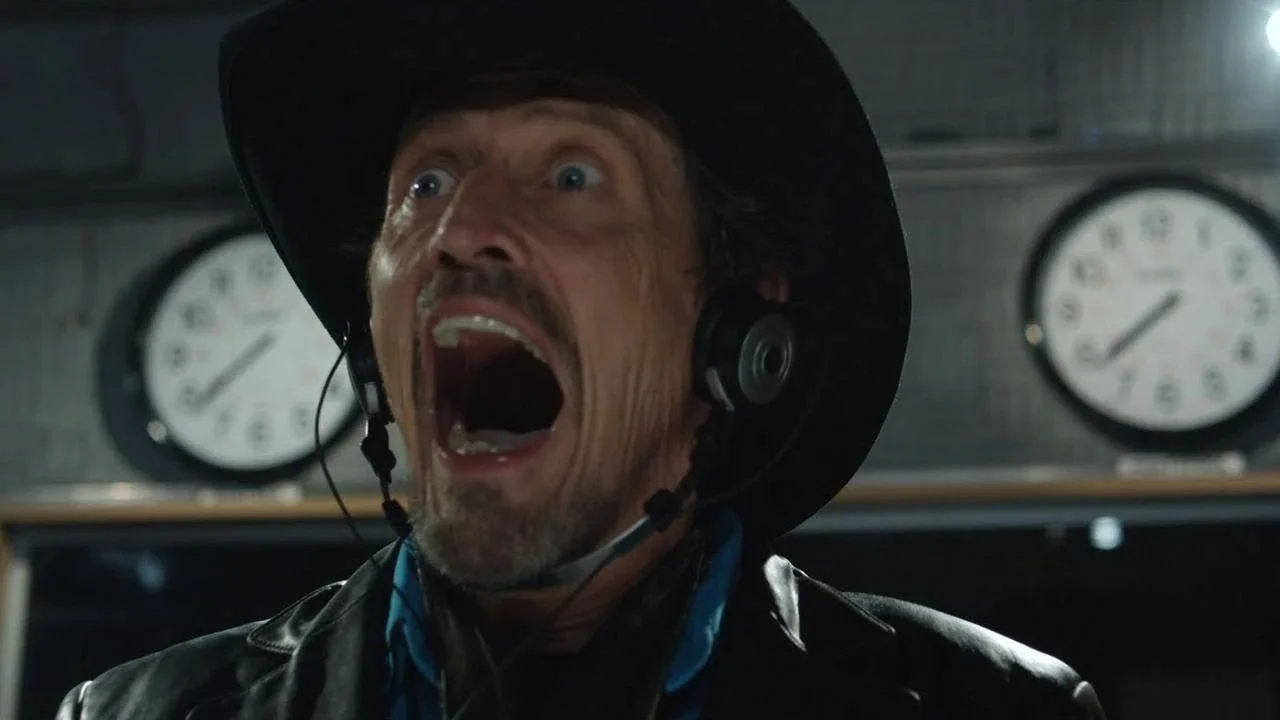
Now, as Mazzy is snowed in with producer Sydney Briar (Lisa Houle) and ‘technical cowgirl’ (Georgina Reilly) at the church basement that is also the local station’s studio, strange reports come over the airwaves of something irrational and apocalyptic transpiring downtown: people afflicted with echolalia doing violence in ‘herd’-like mobs. As this outbreak gets closer, beleaguered, bewildered Mazzy comes to realise that the infectious vector of this outbreak is language itself, and that he, twisting and broadcasting his words live, might just be the carrier, or indeed the cure, of this semiological breakdown.
In the fragmentary narrative of Tony Burgess’ original, ‘unfilmable’ novel Pontypool Changes Everything (1995), Mazzy was both unspeakable monster and mere side player, but for his big-screen adaptation, Burgess has elevated this character to protagonist, with no sign remaining of the earlier Mazzy’s predatory pedophilia. Instead we have a man well used to messing with the heads of his audience, and now confronted with the horrifying arbitrariness of the sign.
Given the cannibalistic nature of the infected, PONTYPOOL is often classified as just another zombie picture - but its focus on language itself, and its location in a bunker removed (except via reports and hearsay) from events in town, make this something unique in the genre. Given the way the very reality that it is constructing for us is constantly ambiguated and transformed, this is that rare, mercurial film which seems different on every viewing/hearing.
© Anton Bitel