
MULHOLLAND DRIVE
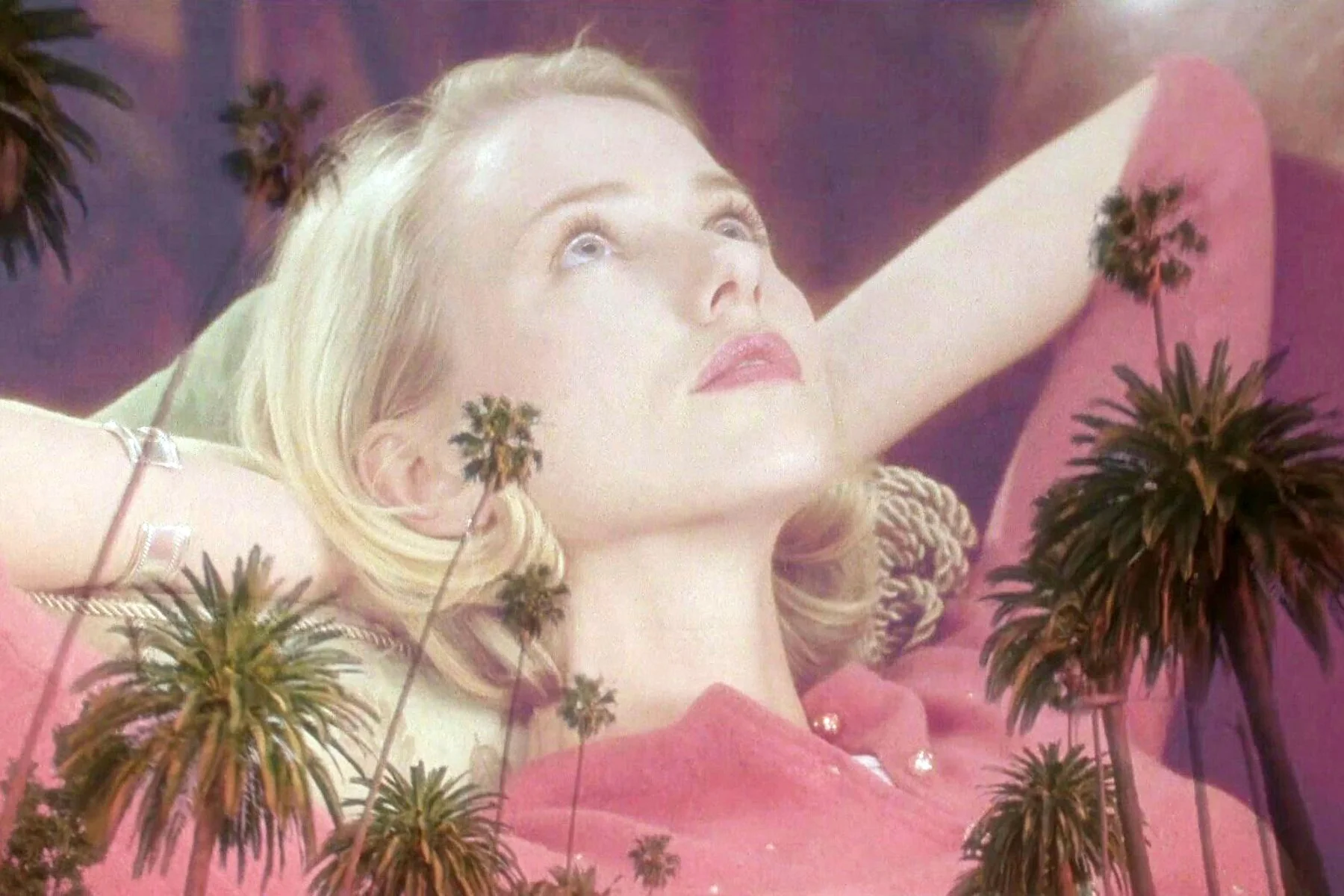
Back in 2001, the neo-noir surrealist mystery, MULHOLLAND DRIVE was my first encounter with the cinema of David Lynch. Until then, the director was merely a name floating around in the ether. The names of the great filmmakers and films echo like thunder in the distance, before that blinding flash when you first lay eyes upon them. MULHOLLAND DRIVE was that flash of introductory lightning for Lynch, that turned into a fierce storm, dragging me down the director's rabbit hole and into the labyrinthine puzzle box of his cinematic universe. To quote Rick from CASABLANCA, it was "the beginning of a beautiful friendship."
I revelled in a film that refused to answer my questions and instead left me to reckon with an unsolvable puzzle box. Lynch was one of the first filmmakers to genuinely open my mind to the possibilities of film.
One might not necessarily think of MULHOLLAND DRIVE as fitting into the horror genre, but the film begins, after the Jitterbug dance, with a limousine winding through the Los Angeles hills. It's set to a sublimely haunting score by Lynch’s frequent collaborator, composer Angelo Badalamenti. There are definite parallels to the opening of Stanley Kubrick's THE SHINING, as Jack Torrance (Jack Nicholson) drives through the mountains to the Overlook Hotel. Of course, it's quieter in comparison to Wendy Carlos and Rachel Elkind's pounding opening theme, that is haunted by the motif of Dies Irae (Day of Wrath) from Hector Berlioz's Requiem.
Then, there's MULHOLLAND DRIVE'S jump scare behind the diner, which is among the best of the past 25 years. Unexpected coming from Lynch, it startles. You feel as if your heart has burst through your chest before you feel those reverberations through your body, as if someone or something has walked over your grave.
Lynch's film is in constant conversation with the horror genre. In HALLOWEEN, John Carpenter made his characters vulnerable in daylight, and in A NIGHTMARE ON ELM STREET, Wes Craven stalked his characters dreams. The fear and paranoia of MULHOLLAND DRIVE'S two protagonists, played by Naomi Watts and Laura Harring, bridge day and night, waking and dream state. And similarly to Kubrick's THE SHINING, LYNCH uses cinematography, editing and music to stir a haunting anxiety and dread in something that lies out of sight, or in the mythology and lore of the puzzle itself. I need not mention the nightmarish space of Club Silencio and how that feeds the horror in the narrative of fame and shattered dreams, or even the dead body lying on the bed, that is quietly unnerving. It is a layered horror film of dreamspaces and the everyday human experience.
MULHOLLAND DRIVE is a beast of a film that offers no easy answers. Lynch has left us to eternally be reckoning with what it actually means. If answers are ultimately disappointing, Lynch gives us a wondrous gift, especially now, when horror films are so on the nose with messaging. After all these years, there's still something refreshing and innovative about this masterstroke of genre cinema. Bravo David Lynch!
Paul Risker